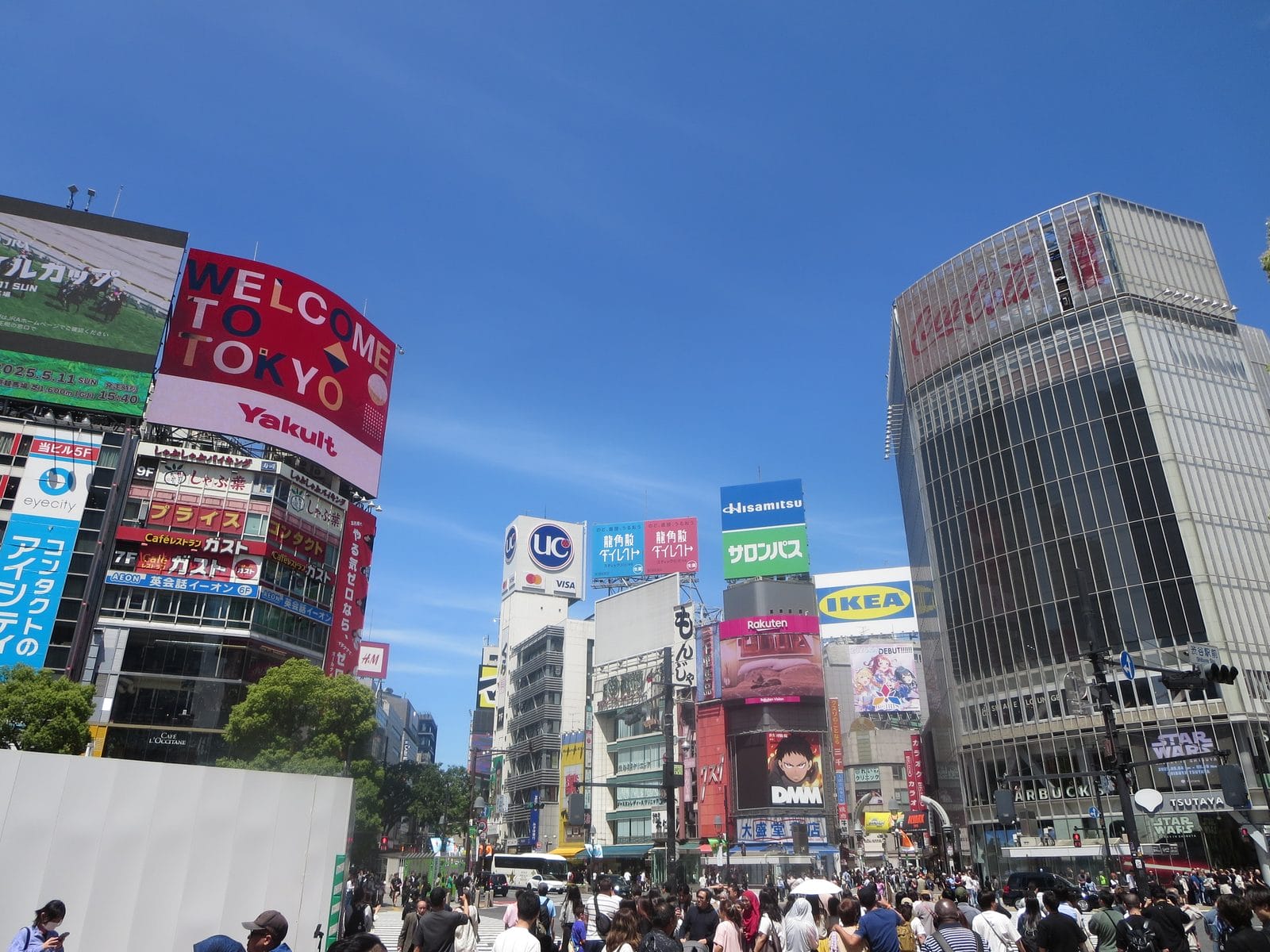
Three days in Tokyo is not enough, but it is enough to fall completely in love with the city. This itinerary is built for first-time visitors who want to cover the highlights without feeling rushed, scattered, or overwhelmed. Each day has a clear geographic focus that minimizes transit time and maximizes the experience.
I spent two weeks in Japan with my mom, starting and ending in Tokyo, and this itinerary covers the main sights we saw. My top tip for a first trip: don’t over-plan. Pick your highlights, then explore and wander as much as you can, and keep looking up. There’s so much to see several floors up in Japanese cities.
Here’s a day-by-day 3-day Tokyo itinerary for first-timers, with hotel picks by neighborhood and real booking links for the big attractions.
📢 Affiliate Disclosure: This post contains affiliate links to Klook, Viator, Expedia, Booking.com, Hotels.com and Amazon. If you book or buy through our links, The Wandering Adventurer earns a small commission at no extra cost to you. Thank you for supporting independent travel content!
⚡ Before You Go
Get an IC card: a Suica or PASMO card (or one added to your phone’s wallet) works on the trains, subways and buses you’ll use in this itinerary, as well as at many convenience stores and vending machines. Top it up as you go. If you’ll ride the subway a lot, a 72-hour Tokyo Subway Ticket → (¥1,500) covers all three days.
Book teamLab Borderless, SHIBUYA SKY and Tokyo Skytree ahead. All three use timed tickets, and popular afternoon and sunset slots can sell out on weekends and in cherry blossom season (late March–April), so book once your dates are fixed.
Best base: Shinjuku or Shibuya. Both are central to Day 2 and an easy train ride to Asakusa and Ginza on the other two days. Hotel picks are below.
Carry some yen: cards are widely accepted, but small restaurants, market stalls and temples may be cash-only.
Pick the right days: the Tokyo National Museum and most Ueno museums close on Mondays, and many Tsukiji Outer Market shops close on Sundays, Wednesdays and national holidays, so avoid doing Day 1 on a Monday or Day 3 on those days.
🗓️ Last updated: November 2026. Prices, opening hours and tours change, so check the official sites before you go.
🏨 Where to Stay for This Itinerary
This route works well from Shinjuku or Shibuya, both central to Day 2’s sights and an easy train ride to Asakusa and Ginza on the other two days.
- Splurging? Park Hyatt Tokyo — in Shinjuku, made famous by Lost in Translation and reopened in December 2025 after a full renovation, with views that stretch to Mount Fuji on clear days.
- Mid-range pick: Hotel Gracery Shinjuku — a short walk from Shinjuku Station, one of the most convenient bases for this route. Read our full guide →
- Boutique pick: TRUNK(HOTEL) CAT STREET — between Harajuku and Shibuya, right in the middle of Day 2’s modern Tokyo route. Read our full guide →
- Budget/hostel pick: Nui. Hostel & Bar Lounge — in Kuramae, about 15 minutes’ walk from Senso-ji Temple, ideal for Day 1’s Asakusa start.
🏨 See our full Tokyo Hotel Guide for more options at every budget →
In Tokyo, we first stayed in an Airbnb in Asakusa, then finished our trip at Miyako City Tokyo, about a 10-minute walk from Shinagawa Station, which connects you all over Tokyo and to the airport. The room was quite small, as you’d expect in Tokyo, but breakfast was included, along with a free soft-drink happy hour and a free drink (check whether that’s still offered). They also let us check in early and held our bags for free after checkout. Booking apartments for the first part of our trip gave us a kitchen and more space on a longer stay. And the Japanese toilets were a fun highlight of every room!
🗓️ Day 1: Historic Tokyo — Asakusa, Ueno & Akihabara
Start your Tokyo trip in its most historic district. Asakusa is home to Senso-ji, Tokyo’s oldest temple. Arrive early to see the Kaminarimon gate and the temple grounds before the busiest sightseeing hours, then explore Nakamise-dori and the surrounding streets of craft shops, incense sellers and rickshaws as they open.
- Morning — Senso-ji & Asakusa: Kaminarimon gate, Nakamise-dori, and the main hall before the tour groups arrive.
- Midday — Ueno Park: Head to Tokyo’s great public park and its museums, including the Tokyo National Museum. In cherry blossom season (late March–early April) it’s one of the city’s most popular hanami spots.
- Evening — Akihabara: Tokyo’s electronics and anime district. Even if you’re not a gamer, the multi-story arcades, manga shops and claw machines are worth seeing.
- Note: the Tokyo National Museum (¥1,000) is closed on Mondays, or the next day when Monday is a public holiday.
💡 Insider Tip: Set up your IC card before your first train so you can tap straight through the gates — it also works at many convenience stores and vending machines.
🎟️ Book the Asakusa & Senso-ji Walking Tour via Klook or Viator — a good option if you’d like a local guide to add the history and folklore behind what you’re seeing.
At temples and shrines, cleanse your hands and mouth at the water basin before you enter. If you’re unsure of the steps, watch the locals or ask. Bow as you enter and leave as a sign of respect. At Senso-ji, we bought our fortunes: if you get a good one, keep it, and if it’s bad, tie it to the racks provided to leave the bad luck behind. In Akihabara we spent time in the arcades and crane machines and browsed all the gaming and anime shops. For bargains, try Daiso and Don Quijote (Donki), and Loft is great for stationery.
🗓️ Day 2: Modern Tokyo — Shibuya, Harajuku & Shinjuku

This is the day for Tokyo at its most modern.
- Morning — Harajuku & Meiji Jingu: Stroll the shrine’s forested path for a peaceful start, then contrast it with Takeshita Street’s youth fashion scene a few minutes away.
- Midday — Shibuya Crossing: Watch the scramble from street level, then head up to the SHIBUYA SKY observation deck above Shibuya Scramble Square for an elevated view over the crossing (timed tickets from ¥2,700 online, released two weeks ahead). Grab lunch at a conveyor-belt sushi restaurant or standing ramen bar.
- Evening — Shinjuku: Golden Gai for tiny atmospheric bars, the free Tokyo Metropolitan Government Building observation deck for night views, and Kabukicho for the full neon experience — just don’t follow street touts into unfamiliar bars.
🎟️ Book SHIBUYA SKY Tickets via Klook
💡 Insider Tip: The Tokyo Metropolitan Government Building observation deck is free and open into the evening, but hours vary between its decks and change for maintenance, so check before you go. The South Deck is open until 10pm but closes on the 1st and 3rd Tuesday of the month; the North Deck closes at 5pm. Meiji Jingu closes at sunset, so do it first.
🎟️ Book a Shinjuku Food Tour via Klook or Viator — a small-group evening with a guide at local eateries, a low-stress way into Shinjuku after dark.
We walked the beautiful tree-lined path to Meiji Jingu and saw a few wedding processions inside the shrine. I loved all the big sights, but my favourite part of Tokyo was getting away from the tourist crowds and wandering the back streets with the locals. Step off the main roads and it becomes quiet and peaceful, and you forget you’re in a metro area of nearly 40 million people.
🗓️ Day 3: Food, Views & Hidden Tokyo

Day 3 combines Tokyo’s food culture with its best views.
- Morning — Tsukiji Outer Market: Aim for around 9am, when the market is lively and most shops are open. Some restaurants open earlier, but shopping in the Tsukiji Uogashi wholesale area is limited to professional buyers until 9am. Try a seafood breakfast, tamagoyaki and market snacks, eat at the shop where you buy (eating while walking isn’t allowed), and bring cash, as most stores are cash only. Many shops close on Sundays, Wednesdays and national holidays.
- Midday — Ginza: High-end shopping, department-store food halls and some of Tokyo’s most striking architecture, a short walk from Tsukiji.
- Afternoon — teamLab Borderless: The immersive digital art museum at Azabudai Hills, where the rooms flow into each other. Entry is by timed ticket.
- Sunset — Tokyo Skytree: At 634 meters, Japan’s tallest tower, with the Tembo Deck at 350m and the Tembo Galleria at 450m, and views to Mount Fuji on clear days.
💡 Insider Tip: Book teamLab and Skytree sunset slots as soon as your dates are fixed — popular times go first, especially on weekends.
🎟️ Book a Tsukiji Fish Market Food Tour via Klook or Viator — a guided walk through the Outer Market with a local who knows which stalls to try.
🎟️ Book teamLab Borderless Tickets via Klook or Viator
🎟️ Book Tokyo Skytree Entry via Klook or Viator
🚫 What to Skip
- Looking for the tuna auction at Tsukiji — the wholesale market and auction moved to Toyosu in 2018. The Outer Market, with its hundreds of shops and restaurants, is still at Tsukiji.
- Both teamLab locations in one trip — Borderless and Planets are different experiences, but doing both eats a huge chunk of a 3-day trip. Pick one.
- Takeshita Street at peak hours — it’s packed on weekend afternoons. An early morning or weekday visit is a much better experience.
- Paper tickets for every ride — skipping the IC card costs you time at ticket machines you don’t need to use.
🧳 Making the Most of 3 Days
- Want more time? Five days lets you add a Hakone or Mt Fuji day trip and a slower afternoon in Ueno. See our Best Day Trips from Tokyo.
- Traveling in cherry blossom season? Swap some indoor time for Ueno Park and the Meguro River, and book popular attractions and hotels as early as you can once your dates are confirmed.
- Not into crowds? Do Asakusa and Takeshita Street early in the day, and save Shibuya for after dark.
- Hungry for more? Our Tokyo Food Guide breaks down the food scene by neighborhood.
🎟️ See our Best Time to Visit Tokyo guide for seasonal crowd and weather patterns →
We used a Welcome Suica card, and it worked perfectly on trains and subways, at vending machines (which are on almost every street corner) and in convenience stores. iPhone users can also add a Suica card to Apple Wallet and simply tap their phone. If you’re a baseball fan visiting during the season, go to a game. It’s a completely different experience from MLB: each team has a band, every player has a song the crowd sings, and the food is cheap and amazing.
🧳 What to Pack for 3 Days in Tokyo
- Comfortable walking shoes — this itinerary involves a lot of walking and time on your feet
- Lightweight daypack for daily sightseeing — Amazon
- Portable power bank for all-day navigation — Amazon
- Compact umbrella for changeable or rainy weather — Amazon
- Some cash in yen (7-Eleven ATMs are commonly used by visitors)
- eSIM or pocket Wi-Fi for maps and train times
- Water bottle — Amazon
🗺️ Planning your Tokyo trip? Our printable, fillable Japan Trip Planner covers day-by-day Tokyo & Kyoto itinerary building and trip logistics, all in one workbook. Get it on Etsy →
❓ Frequently Asked Questions About 3 Days in Tokyo
Is 3 days enough for Tokyo?
Three days covers the main highlights (Asakusa, Shibuya, Harajuku, Shinjuku, Tsukiji, teamLab and Skytree) at a steady pace, though you’ll only scratch the surface. Add two more days for a Hakone or Mt Fuji day trip.
Where should I stay for a 3-day Tokyo trip?
Shinjuku and Shibuya are especially convenient bases for this itinerary: central to Day 2, with major rail hubs and easy connections to Asakusa and Ginza. Asakusa is a good budget alternative for a traditional feel.
What attractions should I book ahead in Tokyo?
teamLab Borderless, SHIBUYA SKY and Tokyo Skytree all use timed tickets, and popular afternoon and sunset slots can sell out on weekends and in cherry blossom season, so book them once your dates are fixed.
What time should I go to Tsukiji Outer Market?
Around 9am. The market is liveliest between about 9am and 1pm, and shopping in the Tsukiji Uogashi wholesale area is limited to professional buyers before 9am, though some restaurants open earlier. Most shops close by the afternoon, so bring cash and eat at the shop where you buy.
How do I get around Tokyo?
Use a Suica or PASMO IC card (physical or in your phone’s wallet) for local trains, subways and buses, and Google Maps for routes and transfers.
What should I avoid on a Monday in Tokyo?
The Tokyo National Museum and most Ueno museums close on Mondays (or Tuesday after a Monday holiday), so swap Day 1 with another day if your trip starts on a Monday.
Plan the Rest of Your Tokyo Trip
Now that you have your days mapped out, here’s what else to plan.
This post contains affiliate links to Klook, Viator, Expedia, Booking.com, Hotels.com and Amazon. The Wandering Adventurer may earn a small commission if you book or buy through our links, at no extra cost to you.
Leave a Reply