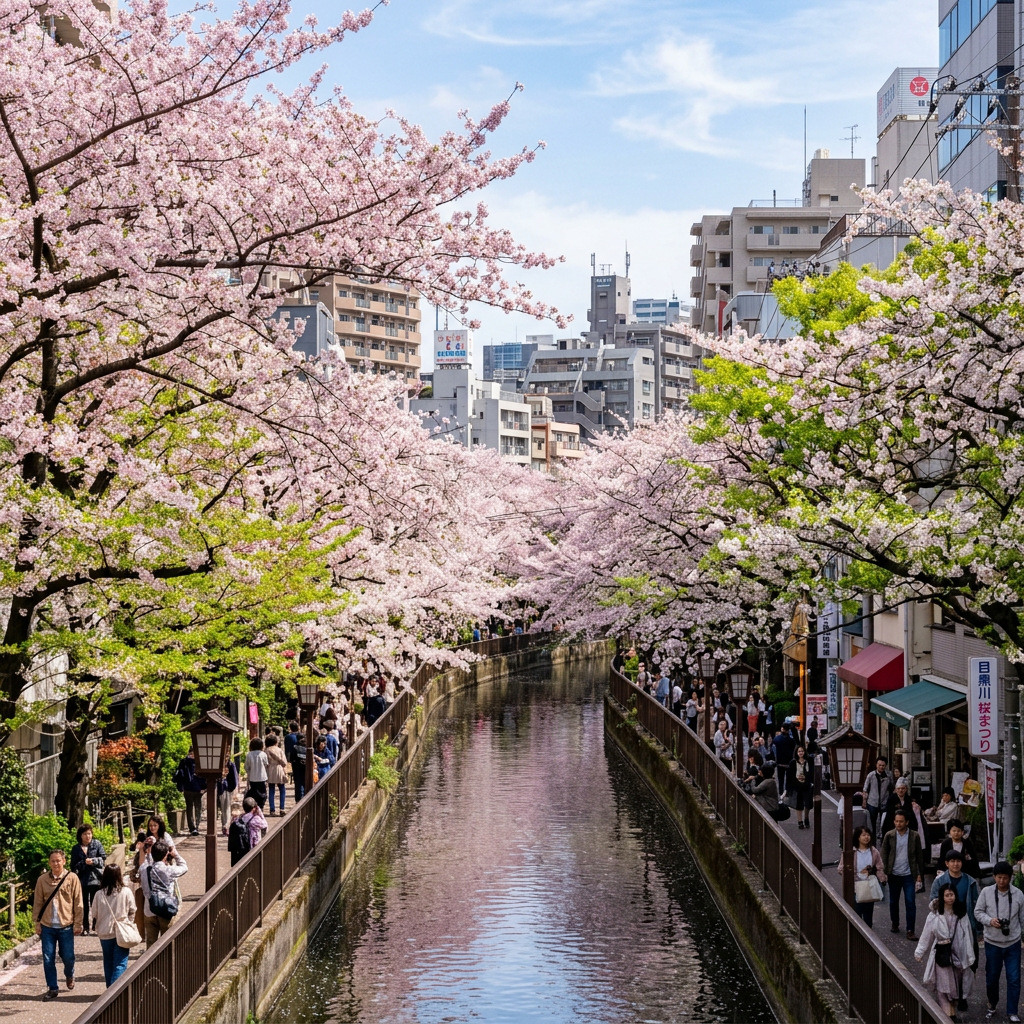
Tokyo genuinely has two must-see windows a year — cherry blossoms in late March/early April, and autumn foliage in November — and they draw completely different crowds and prices than the rest of the calendar. The honest answer to “when should I visit” depends on whether you want those specific spectacles or a calmer, cheaper trip instead.
This guide breaks down the best time to visit Tokyo month by month, so you can match your trip to what actually matters to you: cherry blossoms, weather, crowds, or budget.
📢 Affiliate Disclosure: This post contains affiliate links to Viator and Klook. The Wandering Adventurer may earn a small commission if you book through our links, at no extra cost to you.
⚡ Quick Answer
Best overall: Mid-May through mid-June, or late October through November — comfortable weather, thinner crowds, and lower prices than the two big spectacles.
Best for cherry blossoms: Late March through the first week of April — but book flights and hotels at least 3 months ahead, since this is Tokyo’s single most crowded and expensive window.
Best for budget: January (after New Year’s) through early March — hotel rates run 25-35% below baseline, with clear winter air giving the best Mount Fuji views of the year.
Avoid if possible: Late July through September — brutal humidity, the hottest temperatures of the year, and September specifically carries typhoon risk.
🗓 Tokyo Weather, Crowds & Prices by Month
| Month | Avg. High | Crowds | Prices |
|---|---|---|---|
| January | 10°C / 50°F | Low | Cheapest (25-35% below baseline) |
| February | 11°C / 52°F | Low | Low |
| March | 14°C / 57°F | Rising fast (cherry blossoms) | Rising |
| April | 19°C / 66°F | Very High (early), Medium (late) | Peak |
| May | 23°C / 73°F | Medium (Golden Week spikes early) | Below peak after Golden Week |
| June | 25°C / 77°F | Medium | Below peak |
| July | 29°C / 84°F | Medium-High | Rising |
| August | 31°C / 88°F | High | Peak |
| September | 27°C / 81°F | Medium | Below peak |
| October | 22°C / 72°F | Medium | Moderate |
| November | 17°C / 63°F | Medium-High (autumn foliage) | 30-40% below cherry blossom peak |
| December | 12°C / 54°F | Low-Medium | Low (rises late month for holidays) |
💡 Tokyo runs about 5-8°F cooler than Los Angeles in winter despite a similar latitude, and noticeably more humid in summer — dress accordingly.
🌸 Spring (March–May): Cherry Blossoms & the Real Sweet Spot
Cherry blossoms typically open in central Tokyo around March 22-26, reaching full bloom (mankai) about a week later — a window of just 5-7 days that draws Tokyo’s single biggest crowd and price spike of the year. Many seasoned travelers consider May, after the blossoms fade and Golden Week ends, the actual best month to visit.
- For blossoms specifically: Late March through the first week of April — book 3+ months ahead, and know that peak bloom shifts ±5 days year to year based on winter temperatures.
- For the weather without the premium: May, after Golden Week (April 29-May 5) — warm, comfortable temperatures (15-25°C/59-77°F), low humidity, and crowds that thin out noticeably.
- Avoid if budget matters: Golden Week itself — transport and hotels fill completely and prices spike hard.
🎟️ Book a Mt. Fuji Cherry Blossoms & Hakone Day Tour
☀️ Summer (June–August): Hot, Humid, Festival Season
Summer brings Tokyo’s heat and humidity to their peak, alongside a genuinely lively festival calendar — riverside fireworks displays, summer matsuri, and a loud, energetic city after dark. The evening food tour scene is at its most vibrant in summer, when the city’s entertainment districts come alive after sunset and the izakaya alleys of Shinjuku and Shibuya operate at full intensity.
- Best strategy: Front-load sightseeing to morning and evening, and use the extensive indoor mall and museum network to escape midday heat.
- Watch for: Late June into July is Japan’s rainy season (tsuyu) — expect regular, often heavy showers before the dry heat of August sets in.
- Pack for: The lightest clothing you own, a portable fan, and genuine sun protection — August humidity is a real endurance test.
🎟️ Book the Shinjuku Night Food & Izakaya Tour via Viator
🍂 Autumn (September–November): The Second Spectacle
Autumn foliage peaks in Tokyo in mid-to-late November, turning parks like Rikugien Garden, Shinjuku Gyoen, and Koishikawa Korakuen into deep reds and golds. It’s a genuinely strong rival to cherry blossom season, with meaningfully lower prices.
- Best month: Mid-to-late November — foliage at its peak, hotel rates 30-40% below cherry blossom levels, and 8-10 hours of daily sunshine.
- Watch for: September carries genuine typhoon risk — check forecasts closely if your trip falls in that window.
- Don’t miss: A day trip to Nikko for its UNESCO shrines set against blazing fall color — one of the most popular autumn excursions from Tokyo.
🎟️ Book a Nikko Autumn Foliage Day Tour
❄️ Winter (December–February): Cheap, Clear, and Quiet
Winter is Tokyo’s coldest stretch, but also its driest and sunniest — and genuinely the best time of year to see Mount Fuji from observation decks, since winter air clarity offers 60+ clear-visibility days versus roughly 30 in summer. The Mt. Fuji and Hakone day trip is at its most rewarding in winter when the mountain is snow-capped and the air is crystalline.
- Best for value: January (after New Year’s) through early March — the cheapest hotel rates of the year, with attractions genuinely uncrowded.
- Good to know: Plum blossoms bloom from mid-February at spots like Yushima Tenjin — a quieter, less-hyped preview of cherry blossom season.
- Watch for: Lunar New Year (Feb 17, 2026) brings a short crowd bump from visitors from elsewhere in Asia, especially in Akihabara and Ginza.
🎟️ Book the Mt. Fuji & Hakone Day Tour via Viator
🎉 Key Events in Tokyo
- Hatsumode — First Temple Visit (January 1–3) — The Japanese New Year tradition of visiting a shrine or temple in the first days of the new year. Senso-ji in Asakusa and Meiji Jingu are Tokyo’s busiest hatsumode destinations, drawing millions of visitors over the three-day period.
- Setsubun (February 3) — The Japanese bean-throwing ceremony marking the traditional start of spring. At major temples including Senso-ji and Zojo-ji, celebrities and sumo wrestlers throw roasted soybeans to the crowd to expel evil spirits. One of Tokyo’s most colourful and accessible winter traditions.
- Plum Blossom Season (mid-February–early March) — Tokyo’s quieter precursor to cherry blossom season: pink and white plum blossoms opening at Yushima Tenmangu, Shinjuku Gyoen, and Hamarikyu Gardens. Lower crowds and no premium pricing.
- Cherry Blossom Season (late March–early April) — Tokyo’s most celebrated natural event: approximately 5-7 days of full bloom (mankai) typically beginning around March 23-27. Hanami (flower viewing) picnics fill Ueno Park, Shinjuku Gyoen, and the Meguro River. Hotels fill 2-3 months ahead and prices peak.
- Golden Week (April 29–May 5) — Japan’s longest national holiday stretch, combining four national holidays. Domestic travel surges, popular attractions and day-trip destinations become extremely crowded, and bullet train tickets sell out weeks ahead. Plan around it or budget for it.
- Sanja Matsuri (May, third weekend) — One of Tokyo’s three great festivals, held at Asakusa Shrine over three days. Around 100 portable shrines (mikoshi) are carried through the streets of Asakusa in a procession attended by hundreds of thousands. The most energetic and authentic of Tokyo’s major street festivals.
- Sumidagawa Fireworks Festival (late July) — Tokyo’s largest and most beloved summer fireworks display, launched over the Sumida River between Asakusa and Ryogoku. Around 20,000 fireworks, approximately 900,000 spectators, and a genuinely spectacular summer evening.
- Obon (mid-August) — The Japanese Buddhist festival honoring ancestral spirits, marked by Bon Odori (traditional circular dances) at neighborhood shrines and temples throughout Tokyo. A significant domestic travel period; some city residents return to their hometowns, creating a quieter central Tokyo.
- Autumn Foliage (November) — Tokyo’s other major seasonal spectacle: koyo (autumn colour) peaks in mid-to-late November at Rikugien Garden, Shinjuku Gyoen, Koishikawa Korakuen, and Hamarikyu Gardens. Lower prices and smaller crowds than cherry blossom season.
- Shichi-Go-San (November 15) — A traditional rite-of-passage celebration for children aged three, five, and seven, marked by visits to Shinto shrines in formal kimono. Meiji Jingu and Hie Shrine are particularly picturesque for observing the celebration.
- Winter Illuminations (December–February) — Tokyo’s winter light displays are among the finest in Asia: Roppongi Midtown, Caretta Shiodome, and Marunouchi all host elaborate illumination installations. A genuine reason to visit Tokyo in the off-season.
🧳 Booking Tips by Season
- Booking cherry blossom season? Book flights and hotels at least 3 months ahead — this is Tokyo’s tightest, most expensive window by far.
- Booking autumn foliage? Book 6-8 weeks ahead for mid-to-late November — less pressure than spring, but still a popular window.
- Flexible on dates? The week just before or after peak cherry blossom or foliage season often has near-peak scenery at 30% lower prices.
- Any season: Get a Suica or Pasmo IC card on arrival for seamless travel on trains, buses, and even convenience store purchases.
🎟️ Browse our full Tokyo Hotel Guide →
❓ Best Time to Visit Tokyo: Frequently Asked Questions
What is the single best month to visit Tokyo?
If you want great weather without the cherry blossom crowds and prices, late May (after Golden Week) or November for autumn foliage are the strongest all-around picks — comfortable temperatures, thinner crowds, and noticeably lower hotel rates than late March/early April.
How far ahead do I need to book for cherry blossom season?
At least 3 months ahead for flights and hotels. Late March through the first week of April is Tokyo’s most crowded and expensive window of the year, and popular neighborhoods near Ueno Park and the Meguro River sell out fast.
Is cherry blossom season or autumn foliage season better?
Both are spectacular, but autumn foliage (mid-to-late November) runs 30-40% cheaper than cherry blossom season with a longer, more predictable bloom window — the exact peak dates shift less year to year than cherry blossoms do.
When is the cheapest time to visit Tokyo?
January through early March, right after New Year’s. Hotel rates run 25-35% below baseline, attractions are genuinely uncrowded, and clear winter air gives you the best Mount Fuji views of the year.
What month should I avoid in Tokyo?
Late July through September, if you can help it. Humidity and heat peak in August, and September specifically carries typhoon risk that can disrupt travel plans.
Plan the Rest of Your Tokyo Trip
Now that you’ve picked your dates, here’s what else to plan.
This post contains affiliate links to Viator and Klook. The Wandering Adventurer may earn a small commission if you book through our links, at no extra cost to you.
Leave a Reply