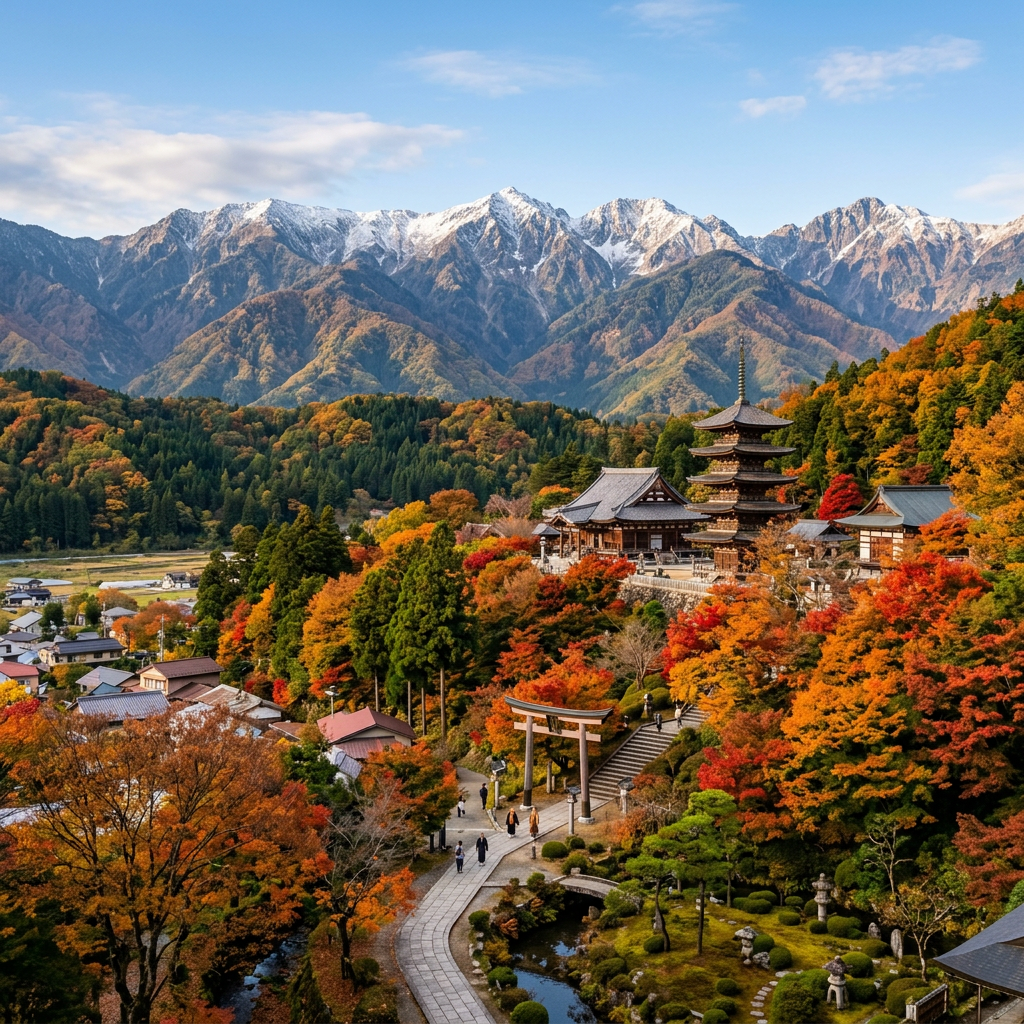
Five days in Japan is short, but planned well it’s enough to experience the contrast between Tokyo’s neon-lit modernity, Kyoto’s temples and bamboo groves, and Osaka’s food-obsessed energy, with a night in Hakone’s hot springs along the way. This itinerary is built for first-timers who want the highlights at a quick but workable pace.
📢 Affiliate Disclosure: This post contains affiliate links to Klook, Viator, Booking.com, Hotels.com and Amazon, plus a link to my own Etsy shop. If you book or buy through our links, The Wandering Adventurer earns a small commission at no extra cost to you. Thank you for supporting independent travel content!
The route: 3 nights Tokyo (including your arrival night) → 1 night Hakone → 1 night Kyoto → Osaka on Day 5. Fly into Tokyo and out of Osaka (Kansai) on the evening of Day 5, or add a night in Osaka if you can. You’ll travel between regions by shinkansen (bullet train) and local trains.
🗺️ Quick Booking Guide — 5-Day Japan Itinerary
| Experience | Best For | Book |
|---|---|---|
| 🛕 Asakusa & Senso-ji Walking Tour (Day 1) | The history behind Tokyo’s oldest temple | Klook | Viator |
| 🗼 Tokyo Skytree (Day 1) | Sunset city views | Klook | Viator |
| 🎡 teamLab Borderless (Day 2) | Immersive digital art | Klook | Viator |
| 🌋 Mt Fuji & Hakone Day Tour (Day 3 alt.) | Skipping the overnight | Klook | Viator |
| ⛩️ Fushimi Inari Tour (Day 4) | Hiking the torii trail | Klook | Viator |
| 🎋 Arashiyama Tour (Day 4) | Bamboo & Zen gardens | Klook | Viator |
| 🍜 Osaka Walking Tour with Lunch (Day 5) | Castle, Dotonbori & food | Viator |
💡 Popular teamLab and Skytree time slots can sell out during busy travel periods, so reserve ahead if they’re priorities. Book Kyoto accommodation early.
🏨 Where to Stay for This Itinerary
Base yourself in Shinjuku or Shibuya for the Tokyo nights, then near Kyoto Station or Sanjo for your Kyoto night. In Hakone, an overnight ryokan stay is the way to get the full onsen experience.
- Tokyo — Mid-range: Hotel Gracery Shinjuku — about five minutes from JR Shinjuku Station’s east exit, a convenient base for Days 1 and 2 and the Romancecar to Hakone on Day 3.
- Tokyo — Boutique: TRUNK(HOTEL) CAT STREET — between Harajuku and Shibuya, right in the middle of Day 2’s route.
- Kyoto — Mid-range: Hotel Granvia Kyoto — built into Kyoto Station, especially convenient for your shinkansen arrival and Day 5’s train to Osaka.
- Kyoto — Boutique: Ace Hotel Kyoto — in the converted 1926 Kyoto Central Telephone Office, with a direct entrance from Karasuma Oike subway station.
🏨 See our full Tokyo Hotel Guide → · See our full Kyoto Hotel Guide →
📅 Day 1: Historic Tokyo — Asakusa, Ueno & Tokyo Skytree
⏱ Start: 7:30am | 📍 Base: Asakusa / East Tokyo
Your first morning belongs to Senso-ji, Tokyo’s oldest temple. Arrive before 8am if you can, when the Kaminarimon gate and the Nakamise shopping street leading to the main hall are quiet, before the tour groups arrive. Draw an omikuji fortune slip at the main hall, then spend some time exploring the surrounding traditional shops and side streets.
By mid-morning, take the metro to Ueno Park. The Tokyo National Museum here is Japan’s oldest and largest museum, with an extensive collection of Japanese art, archaeological objects and cultural treasures. During cherry blossom season the park is a popular hanami (flower viewing) spot.
In the afternoon, head to Akihabara, Tokyo’s electronics and anime district of multi-storey arcades, manga shops and themed cafes. Then end the day at the Tokyo Skytree, whose observation decks at 350m and 450m give expansive views across Tokyo, with Mount Fuji sometimes visible in clear conditions.
💡 Insider Tip: Pick up an IC card such as Suica or PASMO (or add one to your phone’s wallet) for easy payment on most local trains, subways and buses, as well as many convenience stores and vending machines.
🎟️ Book Asakusa & Senso-ji Walking Tour via Klook or Viator
🎟️ Book Tokyo Skytree Entry via Klook or Viator
📅 Day 2: Modern Tokyo — Harajuku, Shibuya, teamLab & Shinjuku
⏱ Start: 8:00am | 📍 Base: West/Central Tokyo
Start in Harajuku: follow the forested path to Meiji Jingu shrine for a quiet morning, then step onto busy Takeshita Street a few minutes later.
Walk or take the train to Shibuya for the famous scramble crossing. For an elevated view of the crossing and the skyline, the Shibuya Sky deck sits on top of Shibuya Scramble Square (timed tickets). Grab lunch at a conveyor-belt sushi restaurant or a ramen counter nearby.
Your afternoon highlight: teamLab Borderless at Azabudai Hills, the immersive digital art museum where rooms of light and sound respond to your movement. Tickets are date- and time-specific and popular slots can sell out, so booking ahead is sensible.
End the night in Shinjuku: Golden Gai’s tiny bars, Kabukicho’s neon streets, and the free observation deck at the Tokyo Metropolitan Government Building for night views of the city.
💡 Insider Tip: The Tokyo Metropolitan Government Building’s observatory is free and open into the evening — check current hours before you go, as they change for maintenance.
🎟️ Book teamLab Borderless Tickets via Klook or Viator
📅 Day 3: Hakone — Mount Fuji Views, Ropeway & Onsen
⏱ Depart Tokyo: 8:00am | 📍 Base: Hakone
Hakone is a mountainous hot-spring area within Fuji-Hakone-Izu National Park, about 85 minutes from Shinjuku on the Odakyu Romancecar. On clear days, Mount Fuji can be visible beyond Lake Ashi.
The Hakone Ropeway carries you over the steaming volcanic vents at Owakudani, with Fuji views from the gondola on clear days. Cross Lake Ashi on the Hakone Sightseeing Cruise’s pirate ships and visit the Hakone Open-Air Museum, a sculpture park with a Picasso pavilion. The Hakone Freepass covers most of this loop.
Then check into a ryokan (traditional Japanese inn) for dinner and an evening soak in the onsen — the reason to stay the night rather than rush back to Tokyo.
💡 Insider Tip: Mount Fuji is cloud-covered on many days, particularly in summer. Visibility is usually best in winter and early spring, often in the early morning, so check the forecast before you set out.
Rather do Hakone as a guided day trip and skip the overnight? These tours return you to Tokyo the same evening (you’d then travel to Kyoto from Tokyo on Day 4): 🎟️ Book a Mt Fuji & Hakone Day Tour via Klook or Viator
📅 Day 4: Kyoto — Fushimi Inari, Arashiyama & Gion
⏱ Depart Hakone: 7:30am (to Odawara, then about 2 hours by Hikari or Kodama shinkansen to Kyoto) | 📍 Base: Kyoto
Head down to Odawara and take the shinkansen west, arriving in Kyoto in the late morning. Drop your bags at your hotel. Kyoto was Japan’s imperial capital for more than a thousand years and is known for its concentration of temples, shrines and historic neighborhoods.
Take the JR Nara Line two stops to Inari for Fushimi Inari Taisha, the mountain shrine famous for its thousands of vermilion torii gates. The lower gates are busy by the time you arrive, but continuing 30 to 45 minutes up the trail brings quieter stretches.
In the afternoon, head to Arashiyama, one of Kyoto’s best-known sightseeing districts, for the bamboo grove, the Tenryu-ji Zen garden and the Togetsukyo Bridge.
End the day in Gion, walking its historic streets and machiya-lined lanes such as Hanamikoji in the evening. Some private alleys are off-limits, and geiko and maiko should never be stopped or photographed without permission.
💡 Insider Tip: Fushimi Inari is free and open 24 hours. If you’d rather see it at its quietest, add a second Kyoto night and go first thing the next morning before heading to Osaka.
🎟️ Book a Fushimi Inari Tour via Klook or Viator
🎟️ Book Arashiyama Bamboo Grove & Temple Tour via Klook or Viator
📅 Day 5: Osaka — Osaka Castle, Kuromon Market & Dotonbori
⏱ Depart Kyoto: 9:00am (about 30 min to Osaka on the JR Special Rapid) | 📍 Base: Osaka (fly out of Kansai that evening, or add a night)
Osaka is especially known for casual food such as takoyaki, okonomiyaki and kushikatsu. Start at Osaka Castle, whose current main tower is a 1931 concrete reconstruction holding a museum on the castle and Toyotomi Hideyoshi.
Head to Kuromon Ichiba Market for seafood, wagyu skewers and produce stalls, grazing on small bites rather than sitting down for a formal lunch.
Spend the afternoon and evening in Dotonbori, one of Osaka’s best-known food and entertainment districts, with the Glico running man sign, takoyaki stalls and okonomiyaki restaurants along the canal.
💡 Insider Tip: Osaka’s motto is kuidaore, roughly “eat until you drop” — pace small plates across the afternoon rather than one big dinner. If you’re flying out of Kansai International Airport that evening, Nankai trains from Namba take from about 35 minutes, but allow plenty of extra time for the transfer and check-in.
🎟️ Book an Osaka Walking Tour: Castle, Dotonbori & Lunch — a guided walk covering the castle and Dotonbori with lunch included, useful if this is your only day in Osaka.
🚫 What to Skip
- Trying to add Nara or Hiroshima — both are worth it, but not on a 5-day trip with Tokyo, Hakone, Kyoto and Osaka already in it.
- Squeezing more into Kyoto — Day 4 already combines the trip from Hakone with Fushimi Inari, Arashiyama and Gion. Don’t add another major sight.
- Buying a rail pass without comparing — check whether it actually saves you money on this route before you buy.
- Booking Kyoto late in blossom or foliage season — hotels fill months ahead.
💡 Essential Japan Travel Tips
- JR Pass: Don’t assume you need one. The Romancecar to Hakone isn’t JR, so price your long-distance journeys individually and compare the total with the current JR Pass price before buying.
- Carry some cash: Cards and IC payments are widely accepted in cities, but cash is still useful at some smaller restaurants, temples and markets. ATMs at 7-Eleven and Japan Post are commonly used by international visitors.
- Mobile data: Arrange an eSIM, SIM or pocket Wi-Fi before your trip so you can use maps and transit apps on the go.
- Book Kyoto accommodation early: demand is especially high during cherry blossom and autumn foliage seasons.
- Luggage forwarding: Send big bags from Tokyo straight to your Kyoto hotel with a delivery service (takkyubin) so you only carry an overnight bag to Hakone.
- Easy-off shoes: Some temples, ryokan and traditional restaurants ask you to remove your shoes.
🗓️ See our Best Time to Visit Tokyo guide for seasonal crowd and weather patterns →
🧳 What to Pack for 5 Days in Japan
- Comfortable walking shoes — this itinerary involves a lot of walking and station transfers
- Lightweight daypack — Amazon
- Portable power bank — Amazon
- Compact umbrella — Amazon
- Reusable water bottle — Amazon
- A small coin purse for cash
🗺️ Want a printable planner for this trip? Our fillable Japan Trip Planner covers day-by-day Tokyo & Kyoto itinerary building and trip logistics — all in one workbook. Get it on Etsy →
❓ 5 Days in Japan: Frequently Asked Questions
Is 5 days enough for Japan?
It’s enough for a strong first taste: Tokyo, a night in Hakone, Kyoto’s temples and a food day in Osaka. You’ll be moving quickly, so choose this if you want highlights, and plan a second trip for depth.
Is Tokyo, Kyoto and Osaka doable in 5 days?
Yes, thanks to the shinkansen: Tokyo to Kyoto takes about two and a quarter hours on the fastest trains, and Osaka is about 30 minutes from Kyoto. This route adds a Hakone night on the way and ends in Osaka.
Do I need a JR Pass for this itinerary?
Not necessarily. Price out your shinkansen legs individually and compare against the current pass price before buying; with only one long-distance leg, a pass often doesn’t pay off.
Where should I stay in Tokyo and Kyoto?
Shinjuku or Shibuya in Tokyo, and near Kyoto Station or Sanjo in Kyoto. Our Tokyo and Kyoto hotel guides break down options from hostels to luxury.
What is the best time of year for this itinerary?
Cherry blossom season in spring and autumn foliage season are especially popular, but exact peak dates vary each year, and both bring heavier demand and higher hotel prices. Spring and autumn are the most comfortable seasons overall.
More Japan & Tokyo Planning Resources
Want more time in Japan, or more detail on a specific city? These guides cover it.
This post contains affiliate links to Klook, Viator, Booking.com, Hotels.com and Amazon, plus a link to my own Etsy shop. The Wandering Adventurer may earn a small commission if you book or buy through our links, at no extra cost to you.
Leave a Reply