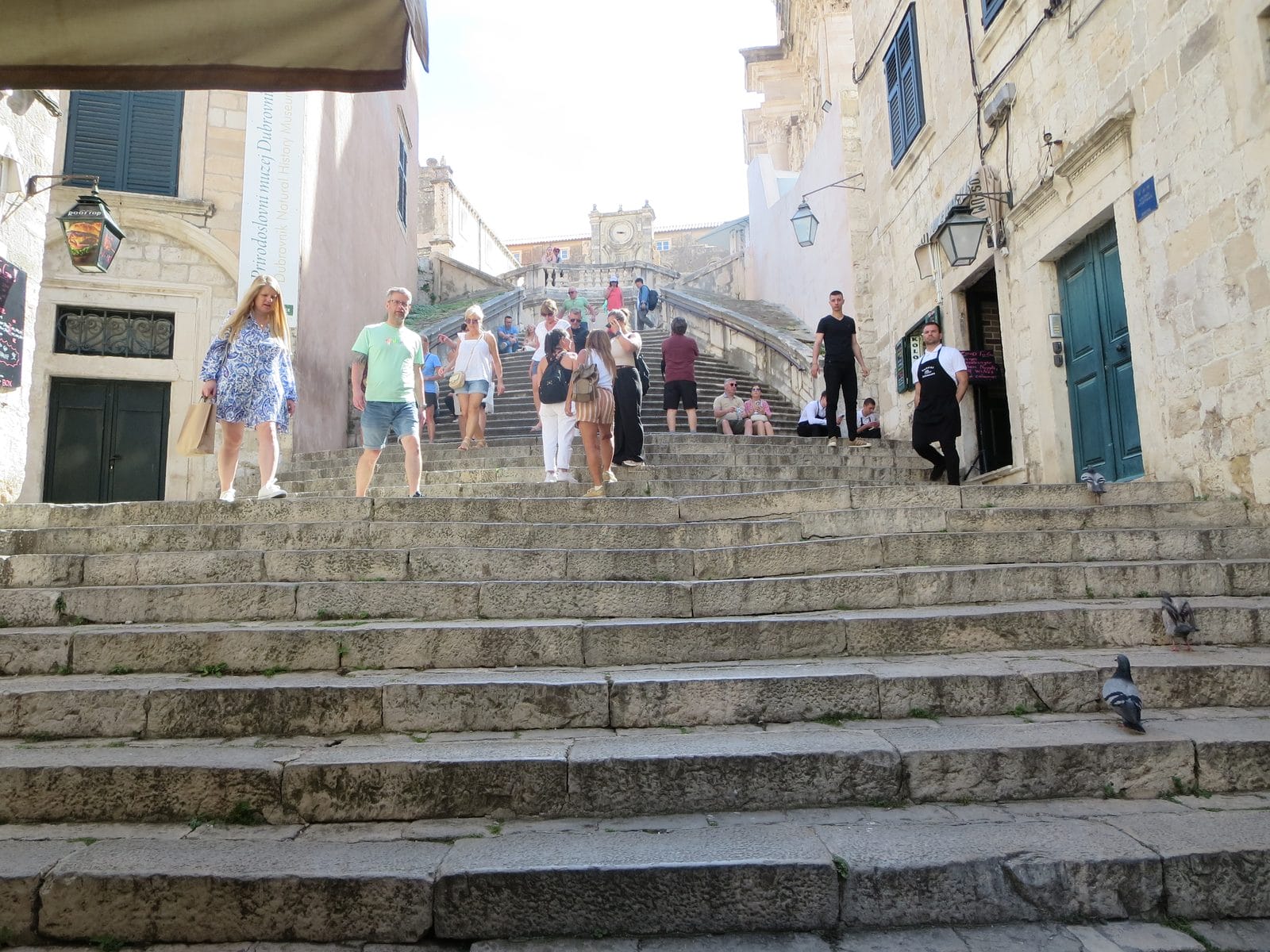
A Mediterranean cruise isn’t a Caribbean cruise with different scenery. Instead of beach days, you’ll spend most port days walking through cities: climbing to the Acropolis, wandering Rome’s cobblestones, walking Dubrovnik’s walls and stepping into centuries-old churches with dress codes. That changes what you need to pack. This Mediterranean cruise packing list covers what to wear in every season, the documents and money you’ll need, the right plug adapter, and exactly what to carry on port days in Italy, Greece, Spain, France and Croatia.
📢 Affiliate Disclosure: This post contains Amazon affiliate links and links to our own Etsy shop. If you purchase through our links, The Wandering Adventurer earns a small commission at no extra cost to you.
⚡ Mediterranean Cruise Packing: Quick Answer
Shoes: Broken-in walking shoes with good grip. You’ll walk 15,000+ steps on many port days, often on cobblestones and steep steps.
Church-ready outfit: Something that covers shoulders and knees, plus a light scarf. St. Peter’s Basilica and many other churches enforce this.
Power: A European Type C adapter for your two-pin chargers, plus a power bank. Italy also has some Type L outlets that Type C won’t fit, so a universal adapter is the safer pick if you’re adding hotel nights.
Money: A card with no foreign transaction fees plus some euros in small bills. Croatia uses the euro now, not the kuna.
Port bag: A zippered crossbody bag, refillable water bottle, sunscreen and sunglasses.
👉 Want it all in one place? Grab our editable Mediterranean Cruise Packing Checklist.
🌍 Why a Mediterranean Cruise Needs Its Own Packing List
- Port days are city days. Rome, Athens, Barcelona and Florence are walking-heavy, so comfort beats beachwear.
- The terrain is tough on feet. Polished limestone in Dubrovnik, hillside steps in Santorini and ancient cobblestones across Italy punish flimsy sandals.
- Churches have dress codes. Many of the biggest sights are religious sites where bare shoulders and short shorts mean you’re turned away.
- Port days often run back to back. Many itineraries have five or six ports in a row, so you’ll want quick-drying clothes and outfits you can rewear.
- You’re in Europe. That means euros, different plugs and new entry rules for visitors.
🗓️ What to Pack by Season
Mediterranean cruise season runs roughly April to November, and the weather changes a lot across those months. Use this as your starting point, then check the forecast for your specific ports a week before you sail.
| Season | What to Expect | Pack |
|---|---|---|
| Spring April–May | Mild, pleasant days and cool evenings. The sea is still chilly for swimming. | Layers, a light jacket, long pants, closed-toe walking shoes |
| Summer June–August | Hot and sunny. Afternoons regularly hit 30°C (86°F) or more in Rome, Athens and the Greek islands. | Linen and breathable fabrics, sun hat, high-SPF sunscreen, swimwear, a church-appropriate cover-up |
| Fall September–October | Still warm in September with the warmest sea of the year. Cooler and showery by late October. | Summer clothes plus a light sweater and packable rain jacket |
| Winter November–March | Cool and rainy, with shorter days. Fewer ships sail and fewer crowds. | Warm layers, waterproof jacket, compact umbrella, waterproof shoes |
💡 Planning Tip: Even in summer, pack one warm layer. Ship restaurants and theaters are air-conditioned, and sailaway on deck gets windy.
👗 Clothing for a Mediterranean Cruise
- Breathable day outfits. Linen, cotton and quick-dry fabrics you can mix and rewear. Plan one outfit per port day, plus a couple of spares.
- At least one church-ready outfit. A midi dress, long skirt or lightweight trousers with a top that covers your shoulders. This applies to men too, so pack long shorts or chinos that cover the knee.
- A light scarf or wrap. The easiest way to cover shoulders on the spot, and it doubles as a layer on windy decks.
- Evening wear. Most lines have one or two dressier nights per week. One good outfit plus accessories covers it.
- Swimwear and a cover-up for the pool, sea days and beach stops like Mykonos.
- A sun hat and sunglasses. There’s very little shade at the Acropolis, Pompeii or Ephesus.
- A light sweater or packable jacket for evenings, air-conditioning and shoulder-season cruises.
🔍 Quick Correction: You’ll often read that the Vatican dress code is only enforced when the Pope is present, or only for women. Neither is true. Shoulders and knees must be covered for everyone entering St. Peter’s Basilica, the Vatican Museums and the Sistine Chapel. St. Peter’s Square itself is open, so you can walk around it in anything.
👟 Footwear
- Broken-in walking shoes or supportive sneakers with grip. The single most important item on this list. Dubrovnik’s polished streets can be slippery, and Santorini’s villages are full of steps.
- Supportive walking sandals for hot days (not flimsy flip-flops).
- Flip-flops or pool slides for the pool deck and beach days only.
- Dressier shoes for evenings onboard. Leave the stilettos at home, since cobblestones and ship stairs aren’t kind to them.
🛂 Documents & Money
- Passport. Requirements depend on your nationality and cruise line. For Canadians, Americans and most other non-EU visitors, Schengen rules require a passport issued within the last 10 years and valid for at least three months after you leave the Schengen area. Many cruise lines ask for six months’ validity, so check both before booking flights.
- Cruise documents and flight details, printed as a backup to your app.
- Travel insurance details, including your policy number and emergency phone line.
- A credit card with no foreign transaction fees. Cards are widely accepted. Check your bank’s international settings before you go.
- Euros in small bills and coins for cafés, public toilets, tips, markets and local buses. Some itineraries include ports with their own currency, like Turkey and Gibraltar, so check yours.
🔍 Quick Correction: Older guides still tell you to get Croatian kuna for Dubrovnik and Split. Croatia switched to the euro on January 1, 2023, and the kuna is no longer accepted in shops.
💡 Entry Rules Update: The EU’s Entry/Exit System (EES) has been fully operational since April 2026. It registers non-EU travelers at Schengen borders, which can include fingerprints and a photo, though some travelers are exempt and the process for cruise passengers depends on your itinerary. ETIAS, the separate travel authorization for visa-free visitors like Canadians and Americans, isn’t live yet. The EU had targeted the last quarter of 2026 but hasn’t announced a start date, and the launch has been delayed several times. Check the official EU ETIAS website before you travel, and only apply through that site.
🔌 Tech & Electronics
- A European plug adapter. Italy, Greece, Spain, France and Croatia use 230V electricity, and most outlets accept the two-round-pin Type C plug. Italy also uses Type L outlets: the 10-amp version takes Type C, but the larger 16-amp version doesn’t. A universal adapter covers both, which makes it the safer pick if you’re adding hotel nights in Italy. An adapter only changes the plug shape, not the voltage. EPICKA Universal Travel Adapter — Check Price on Amazon
- Check the voltage on anything that heats up. Phone and laptop chargers marked 100–240V are fine. Single-voltage hair tools from North America are not, even with an adapter.
- A non-surge-protected power strip, if your line allows one. Surge protectors are banned across the major lines, and some lines, including Royal Caribbean, ban power strips altogether, so check your cruise line’s electrical policy first. Cabin outlets also vary by ship (US-style, European or both). Non-Surge Power Strip — Check Price on Amazon
- A power bank. Maps, photos and translation apps drain your phone fast on long port days. Anker 20,000mAh Power Bank — Check Price on Amazon
- A data plan or eSIM for Europe. It’s usually far cheaper than ship Wi-Fi for maps and messages in port. Turn off roaming at sea, where ships use expensive maritime networks.
🎒 Your Port Day Bag
- A zippered crossbody or anti-theft bag. Pickpockets work the busiest tourist areas, like Las Ramblas in Barcelona and around the Trevi Fountain in Rome. Wear it in front in crowds.
- Your ship card and the ID your cruise line asks for. Most lines want a government-issued photo ID with your ship card, and some ports require your passport. Check the ship’s daily planner before going ashore.
- A refillable water bottle. Rome has free drinking fountains all over the city, and staying hydrated matters on hot walking days.
- Sunscreen, sunglasses and a hat.
- Your scarf for any churches on the day’s route.
- Small euros for coffee, toilets and souvenirs.
- A waterproof phone pouch for boat tours and beach stops. Waterproof Phone Pouch (2-Pack) — Check Price on Amazon
- Motion sickness supplies if you’re prone to seasickness, especially for tender boats and catamaran excursions. Acupressure bands are a drug-free option some travelers like, though the evidence that they work is limited. Sea-Band Acupressure Wristbands — Check Price on Amazon
💡 Insider Tip: In tender ports like Santorini, pack your bag the night before and check how your ship runs tenders, since some lines hand out tender tickets and others assign groups or times. Lines for the tenders and the Fira cable car back down can be long, so allow extra time before all-aboard. Our Santorini cruise port guide walks through the timing.
🧳 Our Editable Mediterranean Cruise Packing Checklist
We turned everything on this list into a printable, fillable checklist designed specifically for Mediterranean and European cruises. It’s built around the things people actually forget for Italy, Greece, Spain and Croatia, from church-appropriate clothing to the right shoes for cobblestones.
- 3-page Mediterranean cruise packing checklist
- Sections for documents, travel essentials, clothing, footwear, toiletries, tech and port-day items
- Fillable PDF: type and check it off in free Adobe Acrobat Reader or on your iPad, or print it at home
- Instant digital download, and you can print copies for everyone in your group
👉 Get the Mediterranean Cruise Packing Checklist on Etsy →
Sailing somewhere warmer? There’s also a Caribbean cruise packing checklist. Taking more than one kind of cruise? Our all-purpose Cruise Packing Checklist works for any itinerary.
🚫 What to Leave at Home
- Surge-protected power strips, irons and steamers. All are banned on major cruise lines.
- Brand-new shoes. Break everything in at home first, or the blisters will find you by day two.
- Too many heels. One dressy pair for evenings is plenty.
- Single-voltage hair dryers. Every cabin has one.
- Flashy jewelry for port days. Keep it simple in crowded tourist areas.
See our full What NOT to Pack for a Cruise guide for banned items, and the general What to Pack for a Cruise checklist for everything else. Sailing somewhere else next? We also have packing lists for the Caribbean, Alaska and Asia.
🛒 Shop all my cruise favorites on my Amazon storefront
❓ Frequently Asked Questions About Mediterranean Cruise Packing
What should I wear on a Mediterranean cruise?
Pack breathable, mix-and-match outfits for port days, comfortable walking shoes, at least one outfit that covers your shoulders and knees for churches, swimwear for sea days, and one or two dressier outfits for evenings onboard. Add a light layer for cool evenings and air-conditioned venues.
What plug adapter do I need for a Mediterranean cruise?
A Type C European adapter works with most outlets in Italy, Greece, Spain, France and Croatia, which all use 230V. Italy also has 16-amp Type L outlets that don’t take Type C, so a universal adapter is the safer choice for hotel stays in Italy. Most modern chargers are rated 100–240V, but single-voltage North American appliances need a voltage converter or should stay home.
What is the dress code for the Vatican on a cruise excursion?
Shoulders and knees must be covered to enter St. Peter’s Basilica, the Vatican Museums and the Sistine Chapel, and this applies to men, women and children. Sleeveless tops, short shorts and miniskirts can get you turned away. A light scarf over your shoulders is the easiest fix on a hot day.
Do I need cash on a Mediterranean cruise?
Cards are widely accepted, but carry some euros in small bills for cafés, public toilets, markets, tips and local transport. Italy, Greece, Spain, France, Malta and Croatia (since 2023) all use the euro. Some itineraries include ports with their own currency, like Turkey and Gibraltar, so check your exact ports.
Do Canadians and Americans need ETIAS for a Mediterranean cruise?
Not yet. As of October 2026, ETIAS isn’t operational. The EU had targeted the last quarter of 2026 but hasn’t announced a start date, and the launch has been delayed several times. Once it launches, visa-free visitors will need it to enter the Schengen area. Check the official EU website before you sail and only apply through that site.
Plan Your Mediterranean Port Days
Bags packed? Here’s how to make the most of every stop.
This post contains Amazon affiliate links and links to our own Etsy shop. The Wandering Adventurer earns a small commission if you purchase through our links, at no extra cost to you.
Leave a Reply