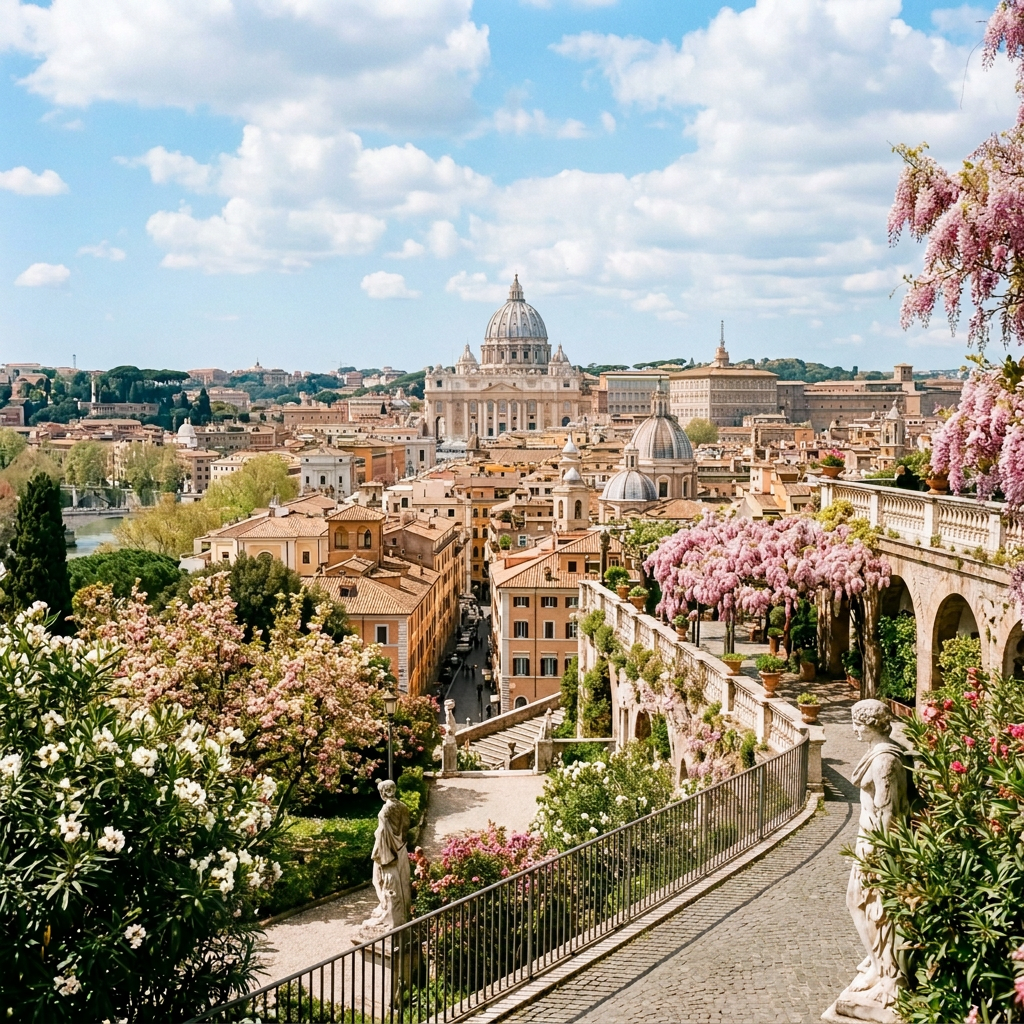
Rome enjoys over 280 sunny days a year, so there’s no genuinely bad month to visit — but there’s a real difference between wandering the Forum in a comfortable 20°C spring morning versus fighting 38°C heat and Colosseum lines packed six-deep in August.
This guide breaks down the best time to visit Rome month by month, so you can match your trip to what actually matters to you: weather, crowds, price, or a specific event on the calendar.
⚡ Quick Answer
Best overall: Late April through early June, or late September through October — warm days, manageable crowds, hotel rates 30-40% below peak.
Best for budget: January and February (outside Christmas week) — hotel rates 30-40% below summer, near-empty museums and ancient sites.
Best for a specific week: The second half of April and first week of May — locals themselves cite this as Rome’s best stretch, with wisteria blooming and consistent weather.
Avoid if possible: Late July through mid-August — heat regularly clears 32-38°C, many family-run restaurants close for Ferragosto, and outdoor sightseeing gets genuinely punishing by midday.
🗓 Rome Weather, Crowds & Prices by Month
| Month | Avg. High | Crowds | Prices |
|---|---|---|---|
| January | 12°C / 54°F | Low (except Christmas week) | Cheapest |
| February | 13°C / 55°F | Low | Cheapest |
| March | 16°C / 61°F | Low-Medium | Low |
| April | 19°C / 66°F | Medium (high at Easter) | Rising (spikes at Easter) |
| May | 22°C / 72°F | Medium-High | Peak-adjacent |
| June | 27°C / 81°F | High | Peak |
| July | 31°C / 88°F | Peak | Peak |
| August | 31°C / 88°F | Peak tourists, quiet locals | Peak |
| September | 27°C / 81°F | Medium-High | Still elevated |
| October | 22°C / 72°F | Medium | Below summer |
| November | 16°C / 61°F | Low | Low |
| December | 13°C / 55°F | Medium (rises near Christmas) | Rises 50% for Christmas week |
💡 October and November are Rome’s wettest months (8-10 rainy days each) — pack a compact umbrella if visiting in fall.
🌸 Spring (March–May): Rome’s Best All-Round Season
From late March the weather turns reliably warm and sunny, gardens flower across the Aventine and the Villa Borghese, and the light is genuinely gorgeous for photos. Locals themselves often name late April into early May as the single best stretch of the Roman year.
- Best window: Late April through the first week of May, outside Easter week — consistent weather, wisteria blooming, and evenings warm enough for outdoor dining.
- Watch for: Easter week draws a genuine surge — Holy Week ceremonies alone can pull 100,000+ pilgrims to St. Peter’s Square. Book major sites and hotels 4+ months ahead if your dates overlap.
- Don’t miss: Skip-the-line access matters most in spring, when crowds are building but the weather still makes walking tours genuinely pleasant.
🎟️ Book a Colosseum Catacombs & Underground Small Group Tour
☀️ Summer (June–August): Hot, Crowded, and Half-Empty (Somehow)
June through August is Rome’s most visited and most physically demanding stretch. Heat routinely tops 31°C/88°F, with July and August genuinely serious — outdoor sightseeing at midday around the Colosseum’s exposed stone can feel punishing.
- Best strategy: Front-load sightseeing to early morning and evening, and save midday for indoor sites, long lunches, or a siesta.
- Avoid if possible: Late July through mid-August — many family-run trattorias close for Ferragosto (Italy’s mid-August holiday), leaving a more tourist-facing dining scene behind.
- Don’t miss: An evening food and wine tour through Trastevere — cooler temperatures after dark and Rome’s most atmospheric neighborhood make for a genuinely great summer evening.
🎟️ Book a Trastevere Evening Food & Wine Tour
🍂 Autumn (September–November): Rome’s Second Sweet Spot
September starts warm but the fierce summer heat eases, and by October you get near-perfect conditions — softer light, thinner crowds, and hotel rates finally easing off their summer peak.
- Best month: October — mild temperatures (18-24°C/64-75°F), fall light, and a genuinely calmer city as the summer rush fades.
- Good to know: Early September still runs warm (24-28°C/75-82°F) if you want a shoulder-season trip with lingering summer weather.
- Pack for: Rain gear — October and November are Rome’s wettest months.
❄️ Winter (December–February): Rome’s Best-Kept Secret
Cool, often overcast, and with short days — but also the year’s cheapest hotel rates and the closest thing to an empty Colosseum you’ll ever get. The Vatican Museums at 9am in January feel like a genuinely different place from July.
- Best for budget and empty sites: January and February, outside Christmas week — museum-heavy trips are genuinely rewarding with minimal crowds.
- Watch for: Christmas week (Dec 22-28) sees rates run roughly 50% above early-December levels, with Vatican and central churches crowded for Papal events.
- What doesn’t work: Outdoor dining and anyone whose trip hinges on warm sunshine — this is a season for museums, churches, and food.
🎉 Key Events & 2026 Notes
- Natale di Roma (April 21) — Rome’s official birthday, marked with events across the historic center.
- Easter and Holy Week — the single biggest crowd driver of the year at the Vatican; book months ahead if your dates overlap.
- Ferragosto (August 15) — a national holiday that empties the city of locals and closes many family-run restaurants for the surrounding weeks.
- 2026 note: pilgrim traffic remains elevated into the first half of the year following the 2025 Jubilee Year, with continued events at St. Peter’s Basilica through Pentecost (late May) — factor this into spring Vatican planning specifically.
🧳 Booking Tips by Season
- Booking spring or fall? Reserve accommodation and major site tickets 60-90 days ahead — these are Rome’s most popular windows.
- Booking summer? Book 90-120 days out for the best selection and pricing during peak season.
- Booking winter? You can wait until 30-45 days out and still find good rates and availability, outside the Christmas/NYE window.
- Any season: Skip-the-line tickets for the Colosseum and Vatican are worth the extra cost regardless of month — regular lines can run over an hour even in shoulder season.
🎟️ Browse our full Rome Hotel Guide →
Plan the Rest of Your Rome Trip
Now that you’ve picked your dates, here’s what else to plan.
This post contains affiliate links to Expedia and Viator. The Wandering Adventurer may earn a small commission if you book through our links, at no extra cost to you.
Leave a Reply