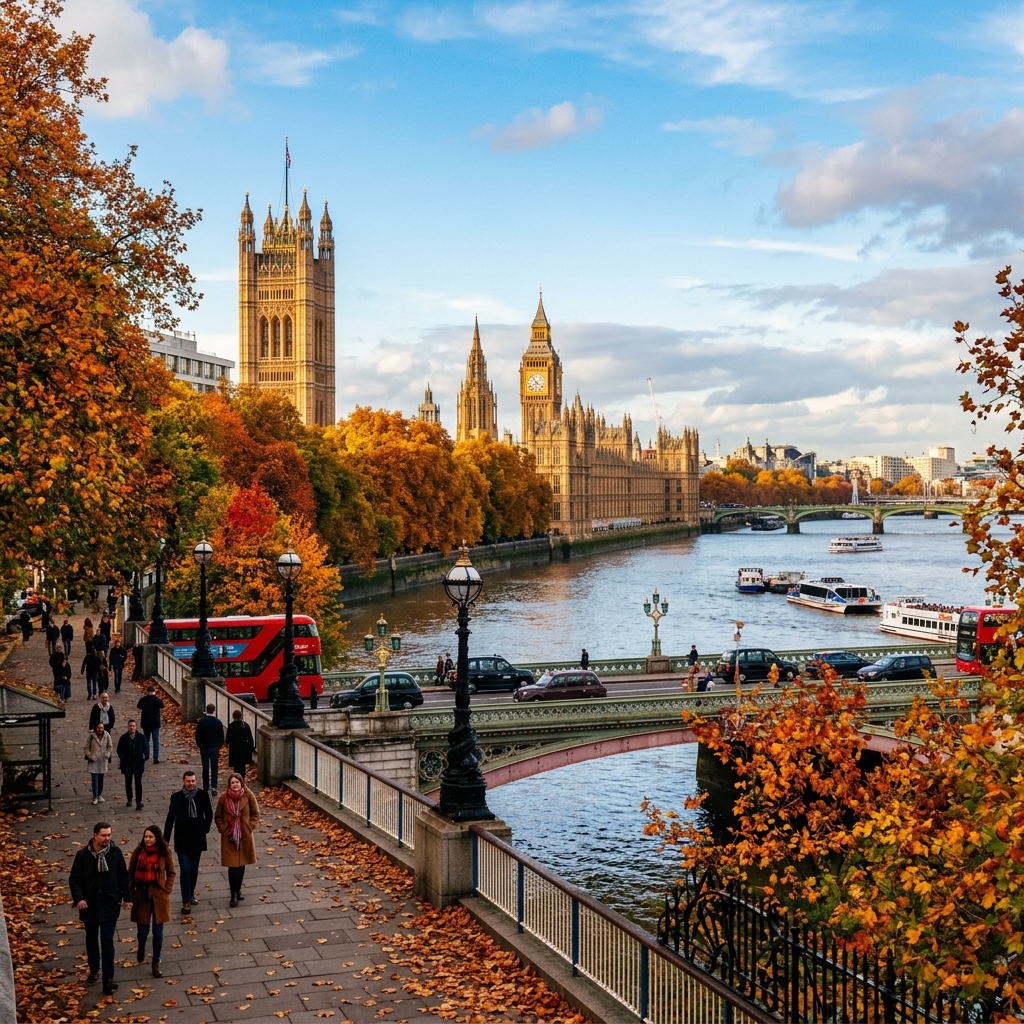
London genuinely works year-round — museums, theaters, and pubs stay open regardless of the month — but the version of the city you get changes a lot depending on when you go. Long golden evenings and festival energy in summer, blooming parks and thin crowds in spring, festive lights and deep discounts in winter.
This guide breaks down the best time to visit London month by month, so you can match your trip to what actually matters to you: weather, crowds, price, or a specific event on the calendar.
⚡ Quick Answer
Best overall: May and September — comfortable temperatures, blooming or golden parks, and hotel rates 20-30% below summer peaks.
Best for budget: January and February — the year’s cheapest hotel rates, with post-holiday sales as a bonus.
Best for atmosphere: Early-to-mid December — Christmas lights on Oxford and Regent Streets, ice rinks at major landmarks, and Hyde Park’s Winter Wonderland.
Good to know: Unlike heavily seasonal destinations, virtually everything in London stays open all year — timing changes your experience, not your options.
🗓 London Weather, Crowds & Prices by Month
| Month | Avg. High | Crowds | Prices |
|---|---|---|---|
| January | 8°C / 46°F | Low | Cheapest, plus post-holiday sales |
| February | 8°C / 46°F | Low | Cheapest |
| March | 12°C / 54°F | Low-Medium | Low |
| April | 14°C / 57°F | Medium | Below summer |
| May | 17°C / 63°F | Medium | Below summer |
| June | 20°C / 68°F | Medium-High | Approaching peak |
| July | 22°C / 72°F | Peak | Peak |
| August | 22°C / 72°F | Peak | Peak |
| September | 19°C / 66°F | Medium | Below summer |
| October | 15°C / 59°F | Low-Medium | Below summer |
| November | 11°C / 52°F | Low | Low |
| December | 9°C / 48°F | Medium (rises near Christmas) | Rises near Christmas/NYE |
💡 London rains fairly evenly year-round — pack a compact umbrella no matter when you visit, but November and August tend to see the most.
🌸 Spring (March–May): Blooming Parks, Thin Crowds
Spring is when London’s parks come alive — Hyde Park goes from bare branches in February to full blossom by late April, and daylight stretches out noticeably by May.
- Best month: May — pleasant weather, manageable crowds, and outdoor attractions at their best.
- Watch for: Easter week can bring a short crowd spike, especially at family attractions.
- Pack for: Layers and rain gear — spring temperatures swing from 12°C/54°F in March to 17°C/63°F by May, with showers possible any day.
☀️ Summer (June–August): Long Days, Peak Everything
Summer brings London’s warmest weather and longest daylight — but also its biggest crowds and highest prices. The Tube’s older lines (Central, Bakerloo, Piccadilly, Northern) lack air conditioning and can feel genuinely oppressive during a heatwave.
- Best month: June — warm-but-comfortable temperatures before the peak July-August crush fully sets in.
- Good to know: This is prime season for an evening Thames cruise — the long daylight means a genuinely spectacular sunset view of the skyline.
- Pack for: Light layers, and choose newer Tube lines (Jubilee, Victoria, Elizabeth) with air conditioning if heat bothers you.
🎟️ Book a Thames Dinner Cruise
🍂 Autumn (September–November): The Balanced Choice
September carries summer’s momentum without the crowds or prices — mild temperatures, parks turning golden, and cultural institutions launching new exhibitions and performances for the season.
- Best month: September — comfortable temperatures (14-19°C/57-66°F), summer crowds gone after school holidays end.
- Good to know: The Totally Thames festival runs through September, celebrating the river with a month of food, music, and exhibitions.
- Pack for: A proper rain jacket — November brings the year’s heaviest rainfall alongside shorter, cooler days.
❄️ Winter (December–February): Festive & Cheap
Winter is cold and dark, but London genuinely leans into it — Christmas lights on Oxford and Regent Streets, Hyde Park’s Winter Wonderland, and ice rinks popping up at landmarks like Somerset House and the Natural History Museum. Since winter isn’t peak tourist season, crowds thin out and museums feel genuinely relaxed.
- Best month: Early-to-mid December — festive lights and markets are up, before the Christmas travel rush fully hits.
- Best for budget: January and February, the year’s cheapest stretch, with post-holiday sales as a bonus.
- Don’t miss: A black cab or walking tour through the West End’s Christmas lights, capped with a stop at Winter Wonderland — see our full guide to London’s Christmas markets for the complete lineup.
🎟️ Book a London Christmas Lights Tour with Optional Afternoon Tea
🎉 Key Events Worth Planning Around
- Totally Thames Festival (September) — a month-long celebration of the river with food, music, and river-based events.
- Notting Hill Carnival (August bank holiday weekend) — Europe’s largest street festival.
- Winter Wonderland (late November–early January) — Hyde Park’s Christmas market, funfair, and ice rink. Part of a wider lineup — see our London Christmas markets guide for the rest.
- New Year’s Eve fireworks — best viewed from a Thames night cruise, away from the packed embankment crowds.
🧳 Booking Tips by Season
- Booking spring or fall? These balanced months book up further ahead than expected — reserve hotels 2-3 months out for May, September, or October dates.
- Booking summer? Expect peak rates and book early, especially around Wimbledon (late June/early July) and Notting Hill Carnival.
- Booking winter? Genuinely the best time for last-minute deals — outside the Christmas/NYE window, flexibility on dates saves real money.
- Any season: An Oyster or contactless card works year-round on the Tube — no need for paper tickets regardless of when you visit.
🎟️ Browse our full London Hotel Guide →
Plan the Rest of Your London Trip
Now that you’ve picked your dates, here’s what else to plan.
This post contains affiliate links to Expedia and Viator. The Wandering Adventurer may earn a small commission if you book through our links, at no extra cost to you.
Leave a Reply