📢 Affiliate Disclosure: This post contains affiliate links to Viator and Klook. If you book through our links, The Wandering Adventurer earns a small commission at no extra cost to you. Thank you for supporting independent travel content!
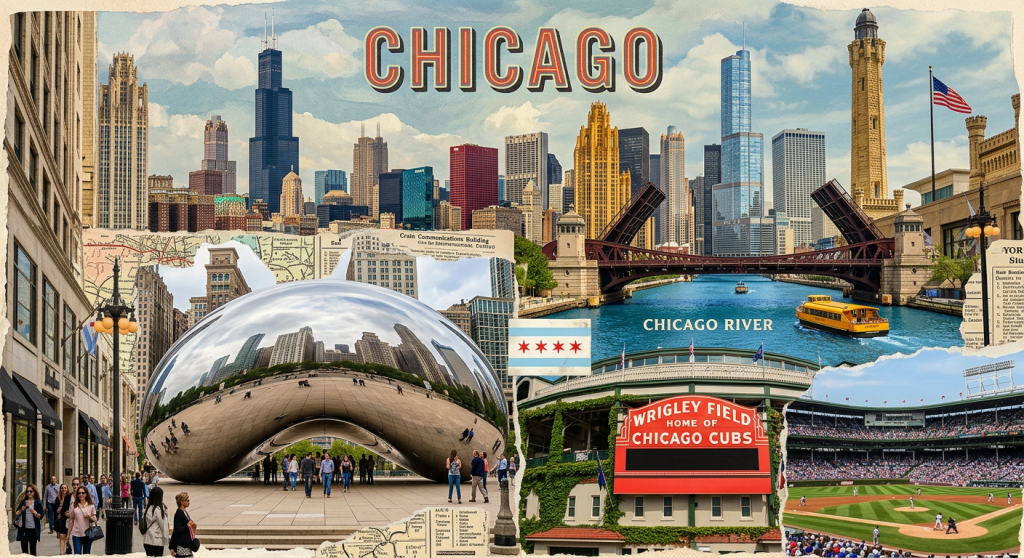
Chicago is America’s most underrated great city — a place where the ambition that rebuilt an entire metropolis after the Great Fire of 1871 expressed itself in the most extraordinary urban architecture in the world, where deep-dish pizza and Chicago-style hot dogs are defended with the passion of a civic religion, where the blues was shaped into its modern form, and where Lake Michigan provides a waterfront of genuine beauty. It is a city that rewards the visitor who gives it time: there is more here, across more dimensions, than almost anywhere else in North America.
This guide covers the top things to do in Chicago — with Viator and Klook booking links, costs, CTA stops, addresses, and insider tips for every attraction. If you’re planning to pack in multiple attractions, the Go City Pass Chicago is worth considering — it bundles top Chicago sights into one pass and can save you significantly compared to buying tickets individually.
🗓 Quick Book: Top Chicago Experiences
| Experience | From | Book |
|---|---|---|
| 🏛️ Architecture River Cruise | ~$45 | Viator | Klook |
| 🎨 Art Institute of Chicago | ~$25 | Viator | Klook |
| 🗻 Willis Tower Skydeck | ~$29 | Viator | Klook |
| 🍕 Chicago Food Tour | ~$69 | Viator | Klook |
| ⚾ Wrigley Field Tour | ~$35 | Viator | Klook |
| 🎟️ Go City Pass Chicago | Varies | Go City |
💡 Architecture cruises are Chicago’s most popular tour — book in advance, especially in summer.
🏛️ 1. Chicago Architecture River Cruise
🕐 Time needed: 1.5 hours | 💶 Cost: From ~$45 per person | 🚌 Getting there: Michigan Ave Bridge (CTA Red/Blue Line to Lake or State/Lake) | 📍 Address: 112 E Wacker Dr, Chicago, IL 60601
The Chicago Architecture Foundation River Cruise is consistently rated one of the best tours in the United States — and for good reason. Chicago’s riverfront is lined with some of the most extraordinary architecture on earth, and seeing it from the water, with expert commentary, is the definitive introduction to the city. The cruise passes over 50 buildings spanning more than a century of architectural innovation — from the Wrigley Building and Tribune Tower to the modernist masterpieces of Mies van der Rohe and the gleaming contemporary towers of the 21st century. It is genuinely one of the great urban experiences in North America and the single best thing to do on a first visit to Chicago.
💡 Insider Tip: Book the Chicago Architecture Center’s own cruise directly or via Viator — there are many operators on the river but the CAC guides are the most knowledgeable. Evening cruises at sunset are particularly beautiful. Book in advance in summer — this is Chicago’s most popular tour and sells out frequently.
🎟️ Book Chicago Architecture River Cruise via Viator or Klook
🌱 2. Millennium Park & Cloud Gate (The Bean)
🕐 Time needed: 1–2 hours | 💶 Cost: Free | 🚌 Getting there: CTA Red/Green/Orange/Brown Line to Randolph/Wabash or Washington/Wabash | 📍 Address: 201 E Randolph St, Chicago, IL 60602
Millennium Park is one of the great urban public spaces in the world — a beautifully designed 24-acre park on the lakefront that has become the civic heart of Chicago. Cloud Gate (universally known as The Bean) is one of the most photographed sculptures in America — Anish Kapoor’s mirror-polished steel form reflects the city skyline and sky in endlessly shifting configurations. The Crown Fountain’s twin glass towers display faces of Chicago residents. The Jay Pritzker Pavilion, designed by Frank Gehry, hosts free outdoor concerts throughout the summer. And the park connects directly to the Art Institute, Grant Park, and the lakefront path.
💡 Insider Tip: Visit The Bean early in the morning (before 9am) for the best photographs — the crowds build quickly through the day and peak in early afternoon. The summer concert series at the Pritzker Pavilion is free and features everything from classical to jazz — bring a picnic blanket. The park connects to the Chicago Riverwalk, making a morning walk from Millennium Park to the river an excellent introduction to the city.
🎨 3. The Art Institute of Chicago
🕐 Time needed: 3–4 hours | 💶 Cost: Adult admission ~$25; free on Thursday evenings (5–8pm) | 🚌 Getting there: CTA Red/Blue Line to Monroe; Brown/Green/Orange/Pink Line to Adams/Wabash | 📍 Address: 111 S Michigan Ave, Chicago, IL 60603
The Art Institute of Chicago is one of the great encyclopaedic art museums in the United States — a collection of extraordinary depth and breadth that rivals the Met and the Louvre in the quality of its holdings. The Impressionist collection is world-class: Georges Seurat’s A Sunday on La Grande Jatte, Grant Wood’s American Gothic, and Edward Hopper’s Nighthawks are here, alongside masterworks by Picasso, Monet, Renoir, and Cézanne. The Modern Wing, designed by Renzo Piano, is one of the finest museum spaces in North America — a light-filled building that houses the museum’s 20th-century collection with extraordinary elegance.
💡 Insider Tip: Thursday evenings (5–8pm) offer free admission — the museum is less crowded than weekend afternoons and the atmosphere is excellent. The Griffin Court café in the Modern Wing is a good lunch option. The museum’s Griffin Court connects directly to Millennium Park via the BP Bridge — combine both in a single morning/afternoon.
🎟️ Book an Art Institute Guided Tour via Viator or Klook
🍕 4. Chicago Deep-Dish Pizza & Food Scene
🕐 Time needed: 2–3 hours (food tour) | 💶 Cost: Deep-dish pizza ~$25–35/person; food tours from ~$69 | 🚌 Getting there: Accessible from multiple CTA lines depending on restaurant | 📍 Lou Malnati’s address: 439 N Wells St, Chicago, IL 60654
Chicago’s food identity is defined by deep-dish pizza — a buttery, thick-crusted pie filled with cheese, chunky tomato sauce, and generous toppings that is as much a civic institution as a meal. Lou Malnati’s, Giordano’s, and Pequod’s are the essential stops in the deep-dish debate. But Chicago’s food scene extends far beyond the famous pizza — the city has a world-class restaurant scene, extraordinary ethnic neighbourhoods (Pilsen for Mexican, Chinatown, Devon Avenue for South Asian), and legendary street food including the Chicago-style hot dog (never with ketchup) and the Italian beef sandwich.
💡 Insider Tip: Deep-dish pizza takes 45 minutes to bake — call ahead or order online to avoid a long wait. Pequod’s in Lincoln Park has a devoted following for its caramelised cheese crust. For the classic Chicago-style hot dog experience, Portillo’s is the most accessible chain. A food tour is an excellent way to cover multiple Chicago food traditions in a single outing.
🎟️ Book a Chicago Food Tour via Viator or Klook
🎙️ 5. Chicago Blues & Jazz
🕐 Time needed: Evening (3–4 hours) | 💶 Cost: Cover charges $10–20; blues tours from ~$45 | 🚌 Getting there: Buddy Guy’s Legends — CTA Red Line to Cermak-Chinatown or Green/Orange Line to Roosevelt | 📍 Buddy Guy’s address: 700 S Wabash Ave, Chicago, IL 60605
Chicago is the home of electric blues — the city where Muddy Waters, Howlin’ Wolf, and Buddy Guy transformed Delta blues into the amplified, urban sound that directly shaped rock and roll. The Chicago blues scene remains genuinely alive: Buddy Guy’s Legends on South Wabash is the city’s premier blues venue, where Buddy Guy himself still performs in January, and the standard of live music throughout the year is extraordinary. Kingston Mines and BLUES on Halsted in Lincoln Park offer late-night blues seven nights a week. The Chicago Jazz Festival in Millennium Park (Labor Day weekend) is one of the finest free jazz events in the world.
💡 Insider Tip: Kingston Mines in Lincoln Park runs blues until 4am on weekends — two stages running simultaneously mean there’s always live music. A guided blues history tour is an excellent way to understand the neighbourhood geography of Chicago’s music history before hitting the venues in the evening.
🗻 6. Willis Tower Skydeck
🕐 Time needed: 1–2 hours | 💶 Cost: From ~$29 per person (book online for best price) | 🚌 Getting there: CTA Brown/Orange/Purple/Pink Line to Quincy; Blue Line to LaSalle | 📍 Address: 233 S Wacker Dr, Chicago, IL 60606
The Willis Tower Skydeck on the 103rd floor offers one of the most extraordinary urban views in the world — on a clear day you can see four states (Illinois, Indiana, Wisconsin, and Michigan) across a panorama that stretches from the vast inland sea of Lake Michigan to the endless flat geometry of the Midwest. The Ledge — glass-floored boxes that extend 4 feet beyond the building’s exterior — offers a stomach-dropping direct view straight down to the street 1,353 feet below. The Skydeck experience has been significantly upgraded in recent years with immersive exhibits about the tower’s construction and Chicago’s architectural history.
💡 Insider Tip: Book timed entry tickets online in advance — walk-up queues can be 1–2 hours on busy summer days. Visit on a weekday morning for the shortest waits and best light for photography. Clear days in autumn offer the best long-distance visibility.
🎟️ Book Willis Tower Skydeck via Viator or Klook
🌊 7. The Chicago Lakefront & Navy Pier
🕐 Time needed: Half day | 💶 Cost: Lakefront free; Navy Pier attractions from $15 | 🚌 Getting there: CTA Red Line to Grand, then walk east; bus 65 (Grand) to Navy Pier | 📍 Navy Pier address: 600 E Grand Ave, Chicago, IL 60611
Chicago’s lakefront is one of the great urban waterfronts in the world — 18 miles of unbroken public parkland, beaches, and paths along the western shore of Lake Michigan that Daniel Burnham’s 1909 Plan of Chicago mandated should remain forever free and open to the public. The lakefront path is excellent for cycling and running, and the beaches (Oak Street Beach and North Avenue Beach are the most popular) fill with Chicagoans throughout summer. Navy Pier — a 3,300-foot pier stretching into the lake — has been transformed into a major entertainment complex with a Ferris wheel, restaurants, boat tours, and regular summer fireworks.
💡 Insider Tip: Rent a bike from Divvy (Chicago’s bike share) and ride the lakefront path from Navy Pier north to Lincoln Park Zoo and back — it’s one of the best urban cycling routes in North America and completely free of car traffic. Navy Pier fireworks run Wednesday and Saturday evenings throughout summer — free to watch from the pier or the lakefront path.
🎟️ Book a Chicago Lakefront Bike Tour via Viator
🌈 8. The Second City Comedy Club
🕐 Time needed: 2–3 hours (evening show) | 💶 Cost: Mainstage shows from ~$30; Late Night shows from ~$15 | 🚌 Getting there: CTA Red Line to North/Clybourn | 📍 Address: 1616 N Wells St, Chicago, IL 60614
The Second City is the most influential comedy institution in American history — the improvisational theatre company that launched the careers of John Belushi, Bill Murray, Gilda Radner, Tina Fey, Stephen Colbert, Steve Carell, and dozens of other comedy legends. Founded in 1959 in Chicago’s Old Town neighbourhood, it continues to produce two mainstage shows per year, performed by an ensemble cast of rising comic talent. The shows combine scripted sketches with improvised scenes and are consistently excellent — you are watching the next generation of American comedy talent at their sharpest.
💡 Insider Tip: The Late Night show (after the mainstage show ends, usually around 10:30pm on weekends) is free or very cheap and features pure improvisation — it’s often the most exciting show of the night. Book mainstage tickets in advance on weekends. The theatre bar serves food and drinks throughout the show.
🏙️ 9. The Magnificent Mile & Chicago Neighbourhoods
🕐 Time needed: Half day to full day | 💶 Cost: Free (walking); architecture tours from ~$30 | 🚌 Getting there: CTA Red Line to Grand or Chicago | 📍 Magnificent Mile: N Michigan Ave between the Chicago River and Oak Street
Chicago’s neighbourhoods are as varied and fascinating as the city’s architecture — each with its own distinct character, history, and food scene. The Magnificent Mile on North Michigan Avenue is the city’s premier shopping and architecture corridor, anchored by the John Hancock Center (now 875 North Michigan) and lined with landmark buildings. Wicker Park and Bucktown are the creative hub of the city — independent boutiques, excellent restaurants, and live music. The South Loop and Pilsen have the best street art and Mexican food. Lincoln Park offers the free zoo, excellent restaurants, and the city’s best farmers’ market.
💡 Insider Tip: The Chicago Architecture Center on the Riverwalk (111 E Wacker Dr) has an extraordinary scale model of the entire Chicago downtown that is worth visiting even without taking a tour — it gives you an immediate spatial understanding of the city that transforms every subsequent walk. Walking tours of the Loop and the Magnificent Mile are available daily and are excellent value.
🎟️ Book a Chicago Architecture Walking Tour via Viator or Klook
⚾ 10. Wrigley Field & a Cubs Game
🕐 Time needed: 3–4 hours (game) or 1.5 hours (tour) | 💶 Cost: Game tickets from ~$25; stadium tours from ~$35 | 🚌 Getting there: CTA Red Line to Addison (directly outside the ballpark) | 📍 Address: 1060 W Addison St, Chicago, IL 60613
Wrigley Field is one of the most beloved sports venues in America — a 1914 baseball park in the Wrigleyville neighbourhood that has changed remarkably little in over a century of operation. The ivy-covered outfield walls, the hand-operated scoreboard, the rooftop bleachers on the surrounding buildings, and the neighbourhood bars packed with Cubs fans before and after games create an atmosphere that is genuinely unlike any other sporting experience in the United States. Whether you attend a game or take the behind-the-scenes stadium tour, Wrigley Field is a pilgrimage site for anyone who loves baseball or American sports culture.
💡 Insider Tip: Arrive 30 minutes before the first pitch for batting practice and the best atmosphere. The Wrigleyville bars — particularly Murphy’s Bleachers directly across from the stadium — are essential pre-game stops. Day games at Wrigley (which has lights but a strong tradition of afternoon baseball) are among the great summer experiences in Chicago.
🎟️ Book a Wrigley Field Tour via Viator or Klook
🍽️ What to Eat & Drink in Chicago
- Deep-dish pizza — The civic religion of Chicago food. Lou Malnati’s has the definitive buttery crust and chunky tomato sauce; Giordano’s does the stuffed version; Pequod’s in Lincoln Park has a devoted following for its caramelised cheese crust. All three are genuine institutions and the debate between them is taken seriously. Deep-dish takes 45 minutes to bake — call ahead.
- Chicago-style hot dog — A Vienna beef dog on a poppy seed bun with yellow mustard, neon green relish, sport peppers, tomato, cucumber, and celery salt. Absolutely no ketchup — this is enforced with genuine civic passion. Portillo’s is the most accessible chain; any neighbourhood hot dog stand will do it right.
- Italian beef sandwich — Slow-roasted beef, giardiniera, sweet peppers, dipped in the cooking jus until the bread is gloriously soggy. Al’s Beef on Taylor Street is the gold standard. Order it “wet” (fully dipped) for the authentic experience.
- Pilsen and Devon Avenue — Chicago’s neighbourhood food corridors are world-class. Pilsen on the near southwest side has the best Mexican food in the city — outstanding taquerias, bakeries, and sit-down restaurants. Devon Avenue on the far north side is a South Asian food corridor of extraordinary quality and depth.
- Alinea, Girl & the Goat, The Publican — For a splurge, Chicago punches at the very top of the American restaurant scene. Alinea is one of the most celebrated avant-garde dining experiences in the world. Girl & the Goat (Stephanie Izard) and The Publican (Paul Kahan) are more accessible but equally serious about their food.
💡 Practical Tips for Chicago
- Best time to visit: June–August for warm weather, outdoor events, and the full lakefront experience. September–October offers excellent weather and fewer crowds. Chicago winters are genuinely brutal — plan accordingly if visiting November–March.
- Getting around: The CTA L train is excellent for getting between major attractions. The Red Line runs north–south through the city centre and connects most visitor destinations. Buy a Ventra card for easy tap payments.
- Architecture: Chicago is the home of modern architecture — even a walk around the Loop without a tour reveals extraordinary buildings at every turn. Download the Chicago Architecture Center’s free AIA Guide app for self-guided walking tours.
- Weather: Chicago’s weather is famously variable — pack layers regardless of the season. Lake Michigan creates its own microclimate and temperatures near the lakefront can be significantly cooler than inland.
- Tipping: Standard US tipping applies — 15–20% at restaurants, $1–2 per drink at bars.
🎟️ Browse all Chicago tours and experiences on Viator
Explore More USA Destination Guides
Chicago is just one of the extraordinary US destinations we cover. Explore more of our American travel guides.
This post contains affiliate links to Viator and Klook. The Wandering Adventurer may earn a small commission if you book through our links, at no extra cost to you.


 The Wandering Adventurer
Leave a comment