Kyoto is Japan at its most achingly beautiful. The former imperial capital for over a thousand years, it holds more UNESCO World Heritage Sites than almost any city on earth — ancient temples half-hidden in bamboo forests, moss-covered stone gardens where raked gravel represents the ocean, and narrow cobblestone lanes where, if you arrive early enough, you might still glimpse a geiko slipping silently between wooden machiya townhouses.
📢 Affiliate Disclosure: This post contains affiliate links to Viator and Klook. If you book through our links, The Wandering Adventurer earns a small commission at no extra cost to you. Thank you for supporting independent travel content!
This guide covers the top things to do in Kyoto — the unmissable temples, the iconic landscapes, and the authentic experiences that make this city unlike anywhere else in the world.
🗓 Quick Book: Top Kyoto Experiences
| Experience | From | Book |
|---|---|---|
| ⛩️ Fushimi Inari Guided Tour | From $35 | Viator | Klook |
| 🐉 Arashiyama Bamboo & Temples Tour | From $40 | Viator | Klook |
| 🎨 Traditional Tea Ceremony Experience | From $25 | Viator | Klook |
| 👘 Kimono Rental & Kyoto Highlights Tour | From $30 | Viator | Klook |
💡 Book popular experiences early — tea ceremonies and guided temple tours fill up fast, especially during cherry blossom and autumn foliage seasons.
⛩️ 1. Fushimi Inari Taisha
⏱ Allow: 2–4 hours (full mountain hike) | 💴 Cost: Free entry | 🚃 Train: JR Inari Station (JR Nara Line, 5 min from Kyoto Station) | 📍 68 Fukakusa Yabunouchicho, Fushimi Ward, Kyoto
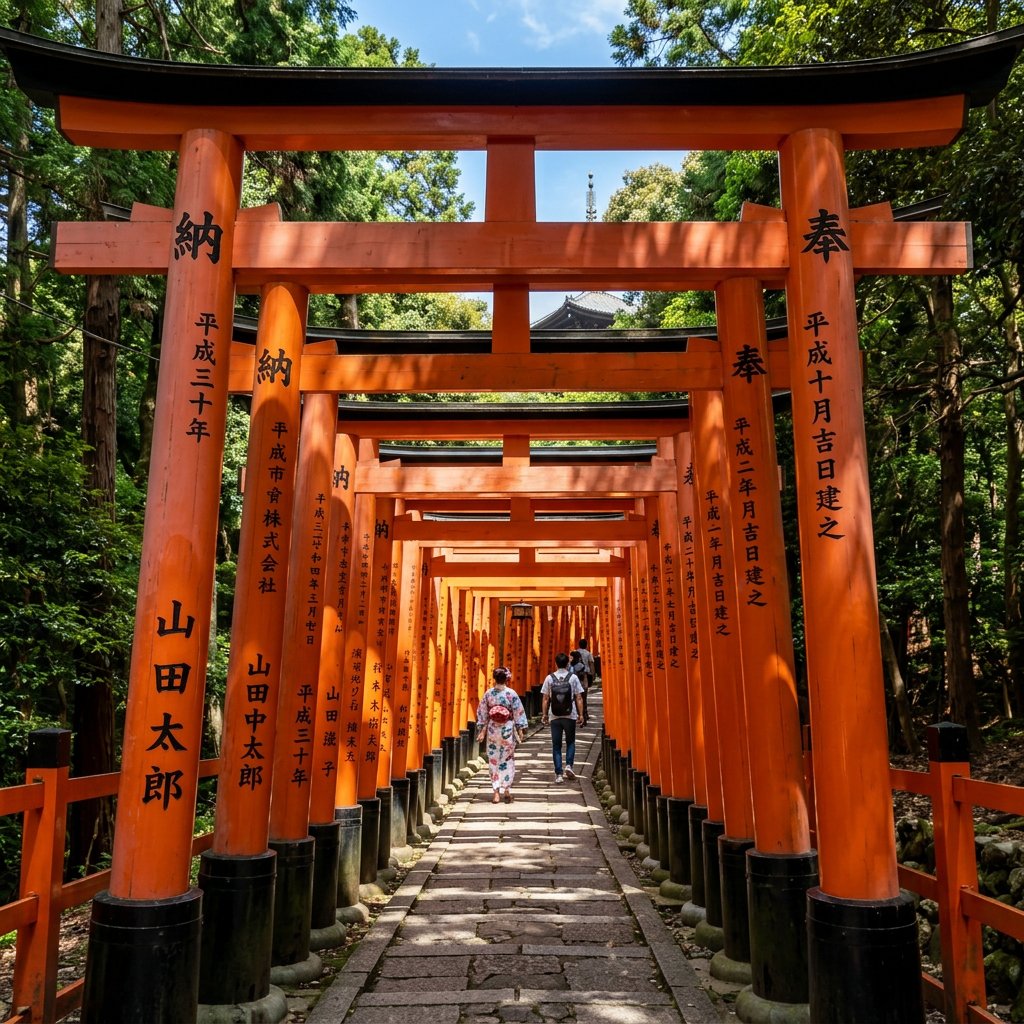
The image that defines Kyoto to the world — thousands of vermilion torii gates winding up a forested mountainside in a seemingly endless tunnel of red and shadow. Fushimi Inari Taisha is dedicated to Inari, the Shinto deity of rice and prosperity, and the 10,000+ gates have been donated by businesses and individuals over centuries. The lower section near the main shrine is stunning but crowded; the further you climb, the quieter and more otherworldly the atmosphere becomes.
The full hike to the summit of Inari-san takes around two hours each way and passes stone foxes, small sub-shrines, and mountain tea houses along the route. Arriving at dawn or after 5pm, when most day visitors have left, transforms the experience entirely — the gates glow with an almost supernatural quality in low light.
💡 Insider Tip: Visit at dawn or dusk for the most atmospheric experience — the gates glow in low light and the crowds are a fraction of daytime levels. A guided evening tour is one of the best experiences in all of Kyoto.
🎟 Book a Fushimi Inari Guided Tour via Viator | Klook
🐉 2. Arashiyama Bamboo Grove & Tenryu-ji
⏱ Allow: 3–4 hours (grove + temple + riverside) | 💴 Cost: Bamboo Grove free; Tenryu-ji garden ¥500 (~$3.50) | 🚃 Train: Sagano Line to Saga-Arashiyama Station | 📍 Sagatenryuji Susukinobabacho, Ukyo Ward, Kyoto
The Arashiyama Bamboo Grove is one of the most photographed places in Japan — a path cutting through towering bamboo stems that creak and sway overhead, filtering the light into something green and dreamlike. The grove itself is short (about 500 metres) but deeply memorable, especially in the early morning before the tourist crowds arrive. Immediately adjacent, Tenryu-ji is one of the finest Zen temple gardens in Japan, with a stroll garden designed in the 14th century that frames the Arashiyama mountains as borrowed scenery.
The surrounding area rewards extended exploration: the Togetsukyo Bridge over the Oi River, the monkey park on the hillside, small temples and tea houses along the riverside path, and the atmospheric streets of Saga-Toriimoto further into the hills. Allow a full half-day for the area.
💡 Insider Tip: Arrive before 8am to have the bamboo grove almost to yourself. The contrast between the crowded midday experience and the peaceful early morning is extraordinary. Rent a rickshaw from Arashiyama Station for a brilliant way to cover the highlights.
🎟 Book an Arashiyama Tour via Viator | Klook
✨ 3. Kinkaku-ji (The Golden Pavilion)
⏱ Allow: 1–1.5 hours | 💴 Cost: ¥500 (~$3.50) | 🚃 Bus: City Bus 101 or 205 to Kinkakuji-michi stop | 📍 1 Kinkakujicho, Kita Ward, Kyoto 603-8361
The sight of Kinkaku-ji — the Temple of the Golden Pavilion — reflected in the still waters of Kyoko-chi pond is one of the most iconic images in all of Japan. The top two floors of the Zen Buddhist temple are covered entirely in gold leaf, and on clear days the effect is almost surreal: pure gold shimmering against a backdrop of carefully pruned pine trees and deep blue sky. The original was burned down by a mentally disturbed monk in 1950; the current pavilion was rebuilt in 1955.
The garden circuit around the pond takes about 30–40 minutes and is beautifully maintained year-round. In winter, when snow settles on the golden roof, the scene is among the most breathtaking in the country.
💡 Insider Tip: Kinkaku-ji is extremely busy mid-morning. Arrive right at opening (9am) or on a weekday for the best experience. Combine with nearby Ryoan-ji (the world-famous rock garden) and Ninna-ji temple for a full northwest Kyoto day.
🎟 Book a Kyoto Temples Guided Tour via Viator | Klook
🎎 4. Gion District & Geisha Culture
⏱ Allow: 1–3 hours (self-guided); evening guided tours available | 💴 Cost: Free to walk; guided tours from ¥4,000 (~$27) | 🚇 Subway: Gion-Shijo (Keihan Line) | 📍 Gion, Higashiyama Ward, Kyoto
Gion is Kyoto’s most famous geisha district and one of Japan’s most atmospheric neighbourhoods — a preserved grid of 17th-century wooden machiya townhouses, stone-paved lanes, and discreet ochaya (teahouses) where geiko and maiko entertain guests behind closed screens. The main street of Hanamikoji is most beautiful at dusk, when lanterns glow and the evening begins. Shimbashi-dori and Shirakawa-minami-dori nearby are even quieter and arguably more beautiful.
Geiko and maiko sightings in the lanes happen most often between 5–7pm as they travel to engagements. Please photograph respectfully from a distance and do not block their path — they are working professionals, not tourist attractions.
💡 Insider Tip: An evening guided walking tour of Gion gives fascinating context to what you’re seeing — the history of the flower towns, the structure of the geisha system, and the architecture of the district. The Miyako Odori geisha dance (April) is one of Kyoto’s most spectacular annual events.
🎟 Book a Gion Evening Walking Tour via Viator | Klook
🏰 5. Nijo Castle
⏱ Allow: 1.5–2 hours | 💴 Cost: ¥1,300 (~$9) adults | 🚇 Subway: Nijo-jo-mae (Tozai Line) | 📍 541 Nijojocho, Nakagyo Ward, Kyoto 604-8301
Completed in 1626 as the Kyoto residence of the Tokugawa shoguns, Nijo Castle is a UNESCO World Heritage Site and one of the best surviving examples of feudal Japanese architecture. The Ninomaru Palace interior is extraordinary — lavishly painted gold-leaf sliding screens depicting tigers, eagles, and pine forests — and the famous “nightingale floors” chirp like birds underfoot as you walk, an ingenious anti-assassination device that made it impossible to approach the shogun silently.
The surrounding Ninomaru garden is a masterpiece of Edo-period design. In late March and early April, the castle grounds are one of Kyoto’s finest cherry blossom viewing spots.
💡 Insider Tip: Listen carefully as you walk the palace corridors — the nightingale floors are genuinely remarkable and one of the most memorable things in Kyoto. An audio guide (available for rent) adds excellent historical context to every room.
🎟 Book a Kyoto Highlights Tour via Viator | Klook
🍣 6. Nishiki Market
⏱ Allow: 1–2 hours | 💴 Cost: Free entry; budget ¥2,000–4,000 (~$13–27) for food | 🚇 Subway: Shijo-Karasuma (Karasuma Line) | 📍 Nishiki Market, Nakagyo Ward, Kyoto 604-8054
Known as “Kyoto’s Kitchen”, Nishiki Market is a narrow, covered shopping street stretching five blocks through central Kyoto, lined with over 100 stalls and small shops selling every imaginable Kyoto specialty: fresh tofu, pickled vegetables (tsukemono), grilled skewers, fresh sashimi, matcha sweets, dried seafood, sake, and hand-painted ceramics. It has served as the city’s food market for over 400 years.
The best approach is to graze as you walk — try a skewer of grilled tofu skin here, a sesame mochi there, a cup of cold dashi broth from the tofu specialist two stalls down. A food tour of Nishiki with a local guide is one of the most delicious things you can do in Kyoto.
💡 Insider Tip: Visit mid-morning on a weekday for the best experience — the market gets extremely crowded on weekends and late afternoon. A guided food tour here is excellent value and reveals context most solo visitors miss entirely.
🎟 Book a Kyoto Food Tour via Viator | Klook
🎨 7. Traditional Tea Ceremony
⏱ Allow: 45 min – 2 hours depending on format | 💴 Cost: ¥3,500–8,000 (~$24–54) | 🚃 Train: Gion-Shijo Station (Keihan Line) | 📍 Various venues across Kyoto
The Japanese tea ceremony (chado or chanoyu) is not simply the preparation and drinking of tea — it is a complete philosophy of aesthetics, mindfulness, and hospitality that has shaped Japanese culture for five centuries. Participating in a proper ceremony in Kyoto, surrounded by a traditional tatami room, a moss garden glimpsed through paper screens, and the unhurried rhythm of the ritual, is one of the most memorable cultural experiences Japan offers.
Options range from short tourist-friendly introductions (perfectly worthwhile) to immersive multi-hour experiences with a tea master. Look for ceremonies held in genuine historic machiya townhouses or temple sub-gardens for the most authentic atmosphere.
💡 Insider Tip: Combine a tea ceremony with kimono rental for a deeply immersive Kyoto morning. Many venues allow you to arrive in your rented kimono, which adds significantly to the atmosphere of the experience.
🎟 Book a Tea Ceremony Experience via Viator | Klook
🛐 8. Higashiyama District & Kiyomizudera
⏱ Allow: 2–4 hours | 💴 Cost: Kiyomizudera ¥500 (~$3.50); Higashiyama lanes free | 🚃 Bus: City Bus 100 or 206 to Kiyomizumichi stop | 📍 1-294 Kiyomizu, Higashiyama Ward, Kyoto 605-0862
Kiyomizudera — the “Pure Water Temple” — is one of the most celebrated temples in Japan, its great wooden stage projecting from the cliff face 13 metres above a hillside of maple trees. The view from the stage over the city below is spectacular, and the temple complex itself is ancient and atmospheric. The lanes leading up to it — Sannen-zaka and Ninen-zaka — are among the most beautiful preserved streetscapes in Japan: wooden merchant houses selling ceramics, matcha, and Kyoto crafts.
The entire Higashiyama district rewards slow exploration — from Kiyomizudera downhill through Ninenzaka to Maruyama Park and the lantern-lit approaches to Yasaka Shrine. It is best walked in the late afternoon as the light turns golden over the tiled rooftops.
💡 Insider Tip: The approach lanes (Sannen-zaka and Ninen-zaka) are at their most magical early morning before the shops open — the stone-paved streets and wooden facades are breathtaking in morning mist. Kiyomizudera illuminations at night during spring and autumn are among Kyoto’s most beautiful seasonal events.
🎟 Book a Higashiyama Walking Tour via Viator | Klook
💡 Practical Tips for Kyoto
- Get an IC card (Suica or ICOCA): Load it with yen and use it on JR trains, the subway, and city buses across Kyoto.
- Japan Rail Pass: If you’re travelling from Tokyo or to Hiroshima, the JR Pass covers Shinkansen and most intercity trains and pays for itself quickly.
- Rent a bicycle: Kyoto is a brilliant cycling city. Many temples and districts are easily connected by bike, and it’s often faster than the bus.
- Cherry blossom (late March–April) and autumn foliage (November) are peak seasons: Book accommodation and popular experiences months in advance.
- Cash matters: Many smaller temples, restaurants, and market stalls are cash-only. Keep ¥10,000–20,000 on hand.
🗾 Planning your Kyoto trip? Our printable, fillable Japan Trip Planner covers day-by-day Tokyo & Kyoto itinerary building and trip logistics — all in one workbook. Get it on Etsy →
More Japan & Asia Travel Guides
Kyoto is one stop on a longer Japan journey. Explore more of what the region has to offer.
This post contains affiliate links. The Wandering Adventurer may earn a small commission if you book through our links, at no extra cost to you. Thank you for supporting independent travel content!
Leave a Reply